
Chiffon Cake is the perfect hybrid of sponge cake and butter cake — it’s incredibly light, yet moist and rich thanks to oil and whipped egg whites. With a delicate crumb and mild flavor, this versatile cake serves as a beautiful base for fruit glazes, whipped cream, or simple dustings of powdered sugar.
Invented in the late 1920s by a Los Angeles baker, chiffon cake became famous for its airy texture and ability to stay moist for days. It’s baked in a tall, ungreased tube pan so it can cling and rise, then cooled upside down to maintain its structure.
Whether you’re new to baking or looking to master a timeless classic, learning how to make chiffon cake from scratch is a rewarding and delicious endeavor.
Ingredients Overview
Each component in a chiffon cake has a specific function that ensures a tall rise, soft crumb, and signature airy bite.
Cake Flour
Low in protein, cake flour produces a tender, delicate crumb. You can make your own by replacing 2 tablespoons of every cup of all-purpose flour with cornstarch.
Granulated Sugar
Divided between the yolk batter and the meringue. It sweetens the cake and helps stabilize the whipped egg whites.
Eggs (Separated)
-
Egg yolks: Add richness and help emulsify the batter.
-
Egg whites: Whipped into stiff peaks to provide lift and airiness.
Use large, room-temperature eggs for best results.
Neutral Oil
Unlike butter, oil remains liquid at room temperature, keeping the cake moist and light.
Baking Powder
Assists in rising during the early baking stages. It complements the airiness from the whipped egg whites.
Cream of Tartar (or Lemon Juice)
Helps stabilize the egg whites and prevents overwhipping.
Liquid (Water or Juice)
Water is standard, but you can substitute with citrus juice or other flavored liquids for variation.
Vanilla Extract
Adds aroma and rounds out the flavor.
Step-by-Step Instructions
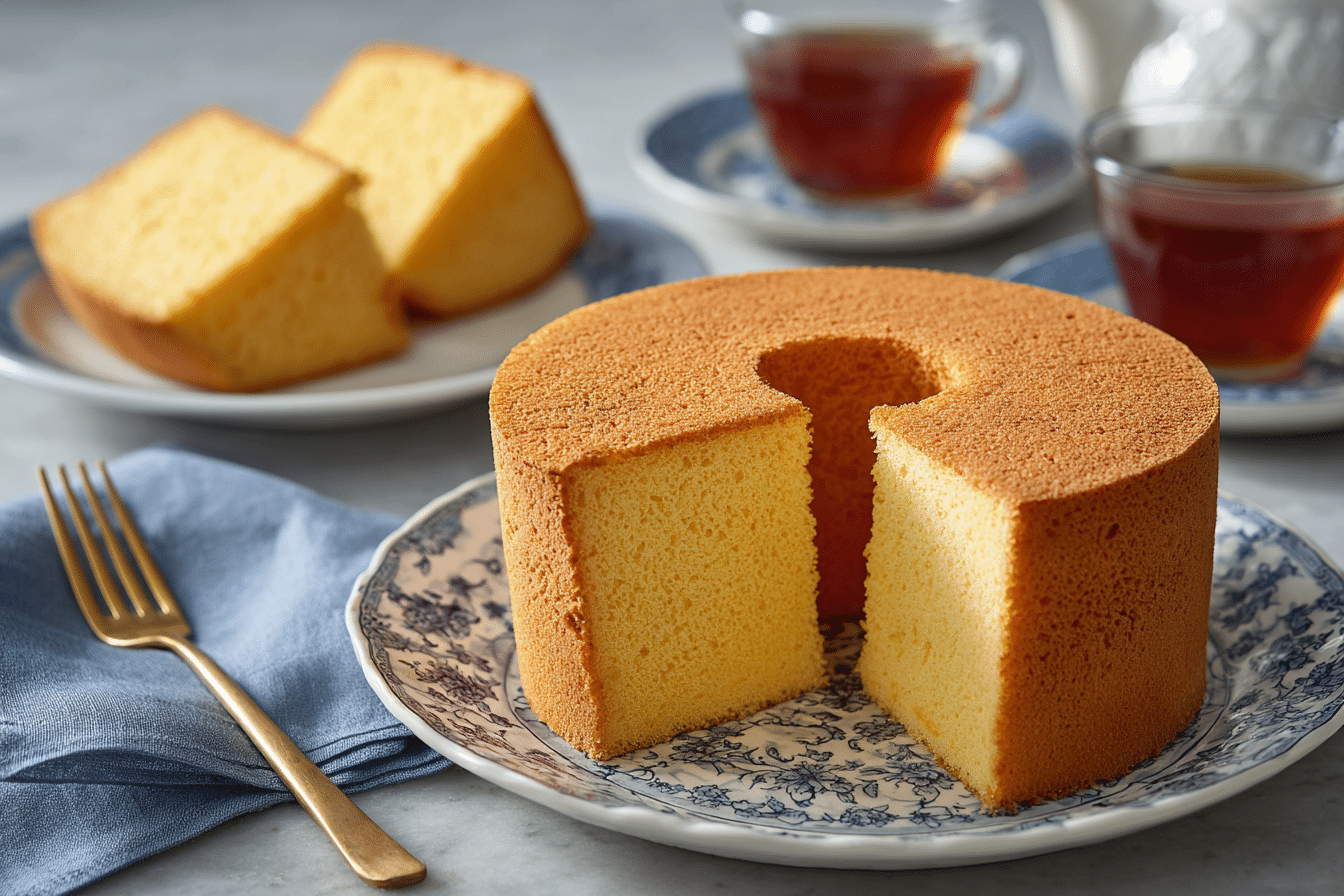
This classic chiffon cake recipe fits a 10-inch tube pan and serves about 12.
1. Preheat the Oven
Preheat to 325°F (163°C). Do not grease the pan — the batter needs to cling to the sides to rise properly.
2. Separate the Eggs
You’ll need:
-
7 large eggs, separated
-
Place whites in a large, clean mixing bowl
-
Yolks in a separate medium bowl
Let them come to room temperature for 15–20 minutes.
3. Make the Yolk Batter
In the bowl with yolks, whisk together:
-
¾ cup granulated sugar
-
½ cup neutral oil (like canola or vegetable)
-
¾ cup cold water (or orange juice for citrus flavor)
-
2 tsp vanilla extract
Whisk until smooth and creamy.
Then sift and whisk in:
-
2 cups cake flour
-
1 tbsp baking powder
-
½ tsp salt
Mix until well combined and lump-free.
4. Beat the Egg Whites
Using a stand or hand mixer, beat the 7 egg whites on medium speed until frothy.
Add:
-
½ tsp cream of tartar (or 1 tsp lemon juice)
Continue beating, gradually adding:
-
¼ cup granulated sugar
Beat to stiff peaks — glossy, stable, and able to stand tall without drooping.
5. Fold the Meringue into the Batter
Gently fold ⅓ of the whipped egg whites into the yolk batter to lighten it. Then fold in the remaining whites in two additions.
Use a spatula and a light hand — do not deflate the batter.
6. Transfer to Tube Pan
Pour the batter into an ungreased 10-inch tube pan. Smooth the top with a spatula. Tap lightly on the counter to remove large air bubbles.
7. Bake
Bake at 325°F (163°C) for 50–60 minutes, or until a toothpick inserted into the center comes out clean and the top springs back lightly to touch.
8. Cool Upside Down
Immediately invert the pan upside down over a bottle or funnel to cool. This keeps the cake tall and prevents collapse.
Let cool completely, at least 1.5–2 hours.
9. Release the Cake
Once fully cooled:
-
Run a thin knife around the edges and center tube to release.
-
Gently lift out the cake.
-
Run knife along the bottom to fully release onto a plate.
Tips, Variations & Substitutions
Pro Tips
-
Use clean, grease-free bowls for egg whites — any fat prevents them from whipping.
-
Don’t overwhip the egg whites — stop at stiff peaks.
-
Gently fold whites into batter in batches to avoid deflation.
-
Use an aluminum tube pan with a removable bottom for best results.
Flavor Variations
-
Lemon Chiffon Cake: Replace water with lemon juice and add 1 tbsp zest.
-
Orange Chiffon Cake: Use orange juice and zest for a classic citrus version.
-
Chocolate Chiffon: Replace ¼ cup of flour with Dutch cocoa powder.
-
Matcha Chiffon: Add 2 tbsp sifted matcha powder to the dry mix.
Substitutions
-
No cream of tartar? Use lemon juice or white vinegar.
-
No cake flour? Make your own with all-purpose flour and cornstarch.
-
Gluten-Free: Use a fine gluten-free flour blend designed for cakes.
Serving Ideas & Occasions
Chiffon cake is light, elegant, and easy to dress up or down.
Serve With:
-
Lightly sweetened whipped cream
-
Fresh berries or berry compote
-
Dusting of powdered sugar
-
Citrus glaze or chocolate drizzle
Occasions:
-
Afternoon tea
-
Bridal or baby showers
-
Holidays and birthdays
-
Light summer desserts
This cake is also perfect after heavier meals — it satisfies without feeling too rich.
Nutritional & Health Notes
Chiffon cake is lighter than butter cakes but still contains sugar and oil.
Per Slice (1 of 12):
-
Calories: ~220
-
Fat: ~9g
-
Sugar: ~18g
-
Protein: ~4g
-
Cholesterol: ~55mg
To lighten it further:
-
Reduce sugar by 2–3 tbsp
-
Use egg whites only (for an angel food–style cake)
-
Use juice instead of water for natural flavor and brightness
FAQs
Q1: Why does chiffon cake collapse after baking?
Most often due to underbaking, overmixed batter, or not cooling upside down. Always bake until fully set and cool inverted to retain structure.
Q2: Can I make chiffon cake in a regular cake pan?
You can, but it won’t rise as high. Use a deep round pan and line only the bottom with parchment — do not grease the sides.
Q3: Can I make chiffon cake ahead?
Yes. It stays moist for 2–3 days at room temp. Wrap tightly or store in a covered container. Can also be frozen for up to 2 months.
Q4: Can I frost chiffon cake?
Absolutely. It pairs beautifully with whipped cream, cream cheese frosting, lemon glaze, or chocolate ganache.
Q5: Can I use all-purpose flour?
You can, but the texture will be slightly less soft. Sift it well and avoid overmixing.
Q6: How do I know when it’s done?
The top should spring back when gently pressed, and a toothpick should come out clean or with just a few crumbs.
Q7: Why is my chiffon cake dense or rubbery?
Common causes include overmixing the batter, deflating the egg whites, or incorrect measuring of ingredients (especially flour).
PrintPerfect Chiffon Cake Recipe from Scratch
A tall, airy, and moist chiffon cake made with whipped egg whites, cake flour, and oil. Light enough for everyday and special enough for any celebration.
- Prep Time: 25 minutes
- Cook Time: 55 minutes
- Total Time: 1 hour 20 minutes
- Yield: 12 servings 1x
Ingredients
-
2 cups cake flour
-
1 tbsp baking powder
-
½ tsp salt
-
¾ cup granulated sugar (for yolk batter)
-
½ cup neutral oil
-
¾ cup water or juice
-
7 large eggs, separated
-
2 tsp vanilla extract
-
½ tsp cream of tartar
-
¼ cup granulated sugar (for egg whites)
Instructions
-
Preheat oven to 325°F. Do not grease a 10-inch tube pan.
-
Mix yolks, oil, sugar, vanilla, and water. Sift in flour, baking powder, and salt. Mix until smooth.
-
Whip egg whites with cream of tartar until frothy. Gradually add ¼ cup sugar. Beat to stiff peaks.
-
Gently fold egg whites into batter in 3 additions.
-
Pour into pan. Smooth top. Bake 50–60 minutes until springy and set.
-
Invert to cool completely. Release and serve.
Notes
-
Use orange juice or lemon juice for citrus variations.
-
Do not grease the pan.
-
Serve with whipped cream or glaze.