
Vanilla Pound Cake is a beloved classic — simple in appearance but rich in flavor and history. Originating from Europe in the early 18th century, traditional pound cake earned its name from its original formula: one pound each of flour, butter, sugar, and eggs.
Over the years, the recipe has evolved into something even more tender and luxurious, especially with the addition of vanilla, sour cream, and leavening agents. The result? A moist, buttery crumb with a golden crust, fragrant vanilla aroma, and a dense texture that’s perfect on its own or dressed up with fruit, whipped cream, or glaze.
This pound cake is a staple in every baker’s repertoire — perfect for everyday snacking, elegant enough for tea time, and sturdy enough to slice and toast.
Ingredients Overview
To achieve the perfect vanilla pound cake, it’s important to understand how each ingredient contributes to the final result:
Essential Ingredients
-
Unsalted butter – The heart of any pound cake. It provides moisture, flavor, and a rich texture. Use good-quality butter and bring it to room temperature for easy creaming.
-
Granulated sugar – Sweetens the cake and aids in the creaming process for a light, fluffy texture.
-
Eggs – Bind the batter and contribute to the dense yet tender structure. Room temperature is best for even mixing.
-
All-purpose flour – Provides the framework for the cake’s structure. You can also use cake flour for a finer crumb.
-
Baking powder and salt – A modern twist that adds a subtle lift and balance to the sweetness.
-
Sour cream – Keeps the cake incredibly moist while adding a slight tang that complements the butter and sugar beautifully.
-
Whole milk – Helps loosen the batter and promotes tenderness.
-
Vanilla extract or vanilla bean paste – Adds warmth and a sweet floral aroma that defines this cake’s classic flavor.
Optional Additions
-
Almond extract – A tiny splash gives a lovely depth when paired with vanilla.
-
Lemon zest – For a light, citrusy lift if you want variation.
Step-by-Step Instructions
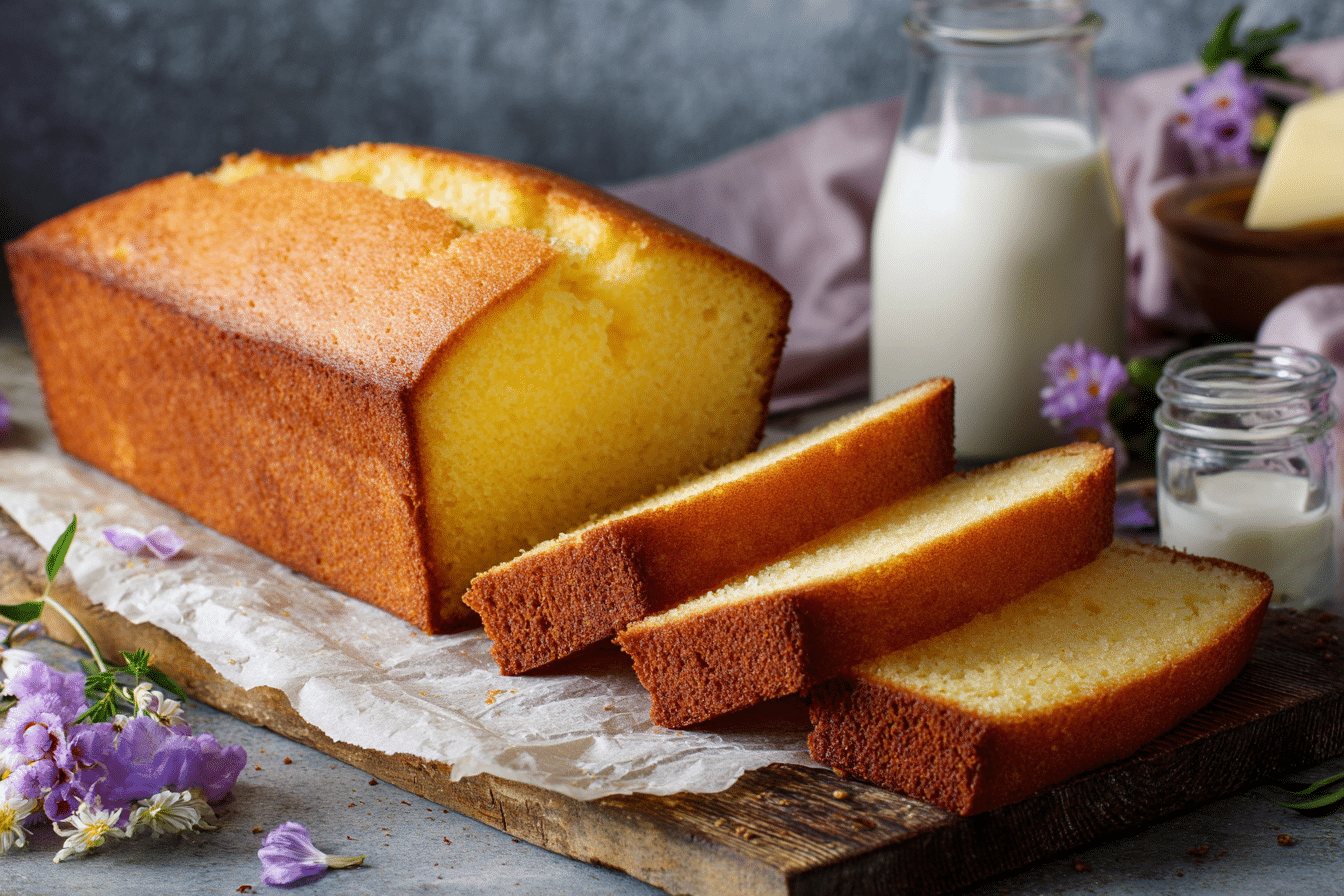
This vanilla pound cake comes together with traditional creaming and careful mixing. Follow these steps to create a tender, buttery loaf every time.
Step 1: Preheat and Prepare
-
Preheat your oven to 325°F (165°C).
-
Grease and flour a 9×5-inch loaf pan or line it with parchment paper.
Step 2: Cream Butter and Sugar
-
In a large mixing bowl, beat 1 cup (2 sticks) unsalted butter with 1½ cups granulated sugar on medium speed for 3–4 minutes, until light and fluffy.
-
Scrape down the bowl as needed to ensure even creaming.
Step 3: Add Eggs and Vanilla
-
Add 3 large eggs, one at a time, beating well after each addition.
-
Stir in 1 tbsp vanilla extract (or 2 tsp vanilla + ½ tsp almond extract, if using).
Step 4: Mix Dry Ingredients
-
In a separate bowl, whisk together:
-
2 cups all-purpose flour
-
1 tsp baking powder
-
½ tsp salt
-
Step 5: Alternate Dry Ingredients and Liquids
-
Add the dry ingredients in three additions, alternating with:
-
½ cup sour cream
-
¼ cup whole milk
-
-
Begin and end with the dry ingredients. Mix until just combined — do not overmix.
Step 6: Bake
-
Pour the batter into the prepared pan and smooth the top.
-
Bake for 55–70 minutes, or until a toothpick inserted in the center comes out clean.
-
Let cool in the pan for 10 minutes, then transfer to a wire rack to cool completely.
Tips, Variations & Substitutions
Baker’s Tips
-
Room temperature ingredients are essential for even mixing and consistent texture.
-
Creaming butter and sugar thoroughly helps aerate the batter and gives the cake its signature fine crumb.
-
Avoid opening the oven door too early — wait until the cake has risen and is golden brown.
Flavor Variations
-
Add ½ tsp almond extract for a nutty undertone.
-
Mix in 1 tsp lemon or orange zest for a bright, citrusy variation.
-
Drizzle with vanilla glaze or lemon icing for an elegant finish.
Ingredient Substitutions
-
Greek yogurt can replace sour cream in equal measure.
-
Cake flour can be used for a finer, softer crumb — just use 2¼ cups and omit 2 tbsp.
-
For dairy-free, use plant-based butter and a thick, non-dairy yogurt.
Serving Ideas & Occasions
Vanilla pound cake is endlessly versatile and shines in both casual and formal settings:
-
Brunch centerpiece – Sliced with fresh berries, yogurt, or whipped cream.
-
Afternoon tea – A perfect pairing with black or herbal teas.
-
Dessert base – Toasted and topped with caramel sauce, berries, or ice cream.
-
Holiday gifting – Wrapped in parchment and twine, it makes a lovely homemade gift.
-
Layered dessert – Cube it and use in trifles or parfaits.
This cake keeps well and gets even better the next day, as the flavors continue to develop.
Nutritional & Health Notes
Though vanilla pound cake is a rich dessert, its simplicity allows for portion control and easy modifications:
-
Calories: About 330–360 per slice (1/10th of the loaf).
-
Fat: Mainly from butter and sour cream, contributing to the moist crumb.
-
Sugar: Moderate — sweet but not overly sugary.
-
Protein: ~5g per slice from eggs and milk.
To lighten it up:
-
Use low-fat Greek yogurt instead of sour cream.
-
Reduce sugar by ¼ cup for a milder sweetness.
-
Serve with fresh fruit for a balanced treat.
FAQs
Q1: Why is my pound cake dry?
Dryness usually results from overbaking or using too much flour. Always spoon and level your flour when measuring, and remove the cake as soon as a toothpick comes out clean with a few moist crumbs.
Q2: Can I freeze vanilla pound cake?
Yes. Once fully cooled, wrap the cake or individual slices in plastic wrap and foil. Freeze for up to 2 months. Thaw at room temperature or microwave individual slices for 20–30 seconds.
Q3: Can I bake this pound cake in a bundt pan?
You can. For a standard 10- or 12-cup bundt pan, double the recipe and bake for 60–75 minutes. Always check doneness with a skewer or cake tester.
Q4: What’s the difference between vanilla pound cake and butter cake?
Butter cake tends to be lighter and fluffier with more leavening and a softer crumb, while pound cake is denser and richer with a tighter crumb and more intense butter flavor.
Q5: Can I make this recipe gluten-free?
Yes, use a 1:1 gluten-free flour blend that includes xanthan gum. The texture will be slightly different, but the cake will still be moist and flavorful.
Q6: How do I get a crack-free top?
A crack on top is traditional and expected in pound cakes due to the dense batter and long bake time. If you prefer a smoother top, bake at a slightly lower temperature (e.g., 315°F) for a bit longer.
Q7: How long will this cake keep?
Stored in an airtight container at room temperature, it will stay fresh for 4–5 days. Refrigerating is not necessary and can dry it out unless tightly wrapped.
PrintVanilla Pound Cake Recipes: Simple, Moist, and Timeless
A moist and buttery Vanilla Pound Cake with a tender crumb, fragrant vanilla flavor, and golden crust. Perfect for snacking, gifting, or serving with coffee or tea.
- Prep Time: 15 minutes
- Cook Time: 60 minutes
- Total Time: 1 hour 15 minutes
- Yield: 10 slices 1x
Ingredients
-
1 cup (2 sticks) unsalted butter, softened
-
1½ cups granulated sugar
-
3 large eggs
-
1 tbsp vanilla extract
-
2 cups all-purpose flour
-
1 tsp baking powder
-
½ tsp salt
-
½ cup sour cream
-
¼ cup whole milk
Instructions
-
Preheat oven to 325°F. Grease and line a 9×5-inch loaf pan.
-
Cream butter and sugar for 3–4 minutes until light and fluffy.
-
Add eggs one at a time, then stir in vanilla.
-
In a separate bowl, whisk flour, baking powder, and salt.
-
Add dry ingredients in three additions, alternating with sour cream and milk.
-
Pour into loaf pan and smooth the top.
-
Bake 55–70 minutes, or until a toothpick comes out clean.
-
Cool in pan 10 minutes, then transfer to a wire rack to cool completely.
Notes
-
Add almond extract or lemon zest for flavor variation.
-
Store at room temperature for up to 5 days.
-
Glaze with vanilla icing or top with fruit if desired.