
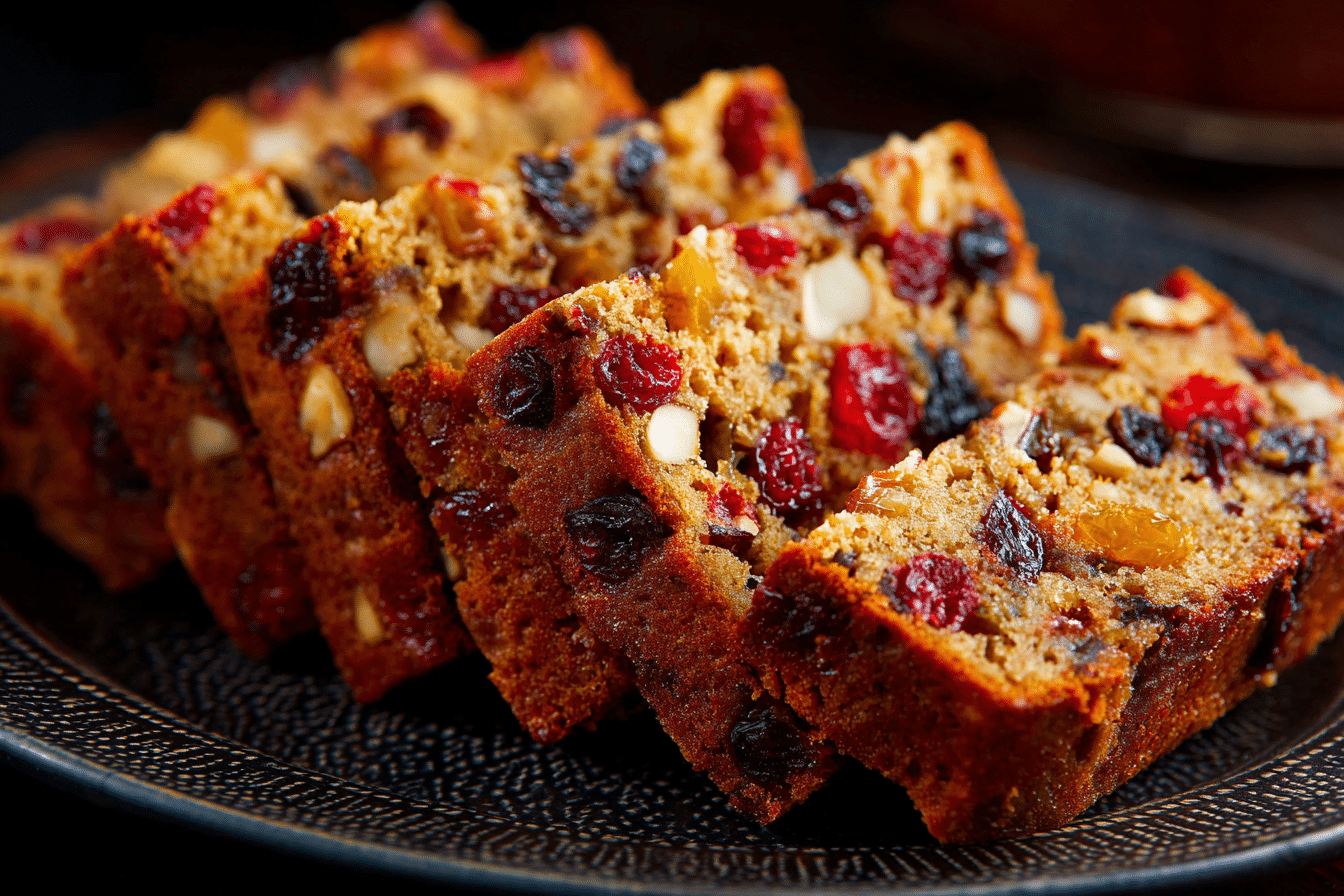
This easy traditional fruitcake recipe delivers everything you love about this classic holiday treat — a dense, moist crumb, warm spices, and a medley of dried fruits soaked in flavor. It’s the kind of cake that improves over time, making it a seasonal favorite passed down through generations.
Often misunderstood, a well-made fruitcake is truly a festive delight. Rich but not overly sweet, hearty but not dry, this version avoids the brick-like texture of store-bought ones and instead stays moist for weeks. With the right ingredients and simple technique, you’ll get a flavorful cake that slices beautifully and becomes even better as it rests.
Whether you’re baking for a Christmas centerpiece, gifting loved ones, or prepping for a cozy winter weekend, this foolproof fruitcake will make you rethink everything you thought you knew about this old-fashioned classic.
Ingredients Overview
Traditional fruitcake relies on a balance of dried fruits, nuts, warm spices, and a moist batter base. Here’s what you’ll need, plus some smart swaps and storage tips.
Dried Fruits:
-
Raisins and sultanas: Provide sweetness and chew. Choose plump, soft ones for best results.
-
Dried cherries or cranberries: Add tart contrast. Avoid sweetened varieties if you want to control sugar.
-
Mixed candied peel: Offers that unmistakable fruitcake flavor. Dice finely to distribute evenly.
-
Optional: chopped dates, dried apricots, or figs for added depth.
Soaking Liquid:
-
Dark rum, brandy, or orange juice: Softens the fruit and infuses the cake with flavor. Alcohol helps preserve the cake, while juice keeps it non-alcoholic.
Nuts:
-
Chopped walnuts, pecans, or almonds: Add crunch and contrast. Toast them lightly for deeper flavor.
Spices:
-
Cinnamon, nutmeg, and allspice: Classic holiday warmth. Ground ginger or cloves can be added for extra spice.
Batter Base:
-
Unsalted butter: Adds richness and tenderness.
-
Brown sugar: Moisture-retaining and caramel-like.
-
Eggs: Bind the mixture and help with structure.
-
All-purpose flour: A sturdy base for holding all the mix-ins.
-
Baking powder: Provides light lift without compromising the dense texture.
-
Molasses or golden syrup: Keeps the cake moist and flavorful.
-
Zest of orange and lemon: Adds brightness and balance to the dense batter.
Step-by-Step Instructions
1. Soak the Fruits
At least one day before baking (or up to a week ahead), combine all dried fruits and peels in a large bowl. Pour over your soaking liquid (rum, brandy, or juice), stir well, and cover.
Let it sit at room temperature, stirring occasionally, until the fruits are plump and fragrant. This step makes all the difference in flavor and moisture.
2. Prepare the Pan
Grease and line a 9-inch round or 8×4-inch loaf pan with parchment paper. Double lining helps insulate the cake and prevent burning during the long bake.
Preheat your oven to 150°C (300°F).
3. Mix the Batter
In a large bowl, cream softened butter and brown sugar until light and fluffy. Beat in the eggs, one at a time, scraping down the bowl between additions.
Mix in the molasses or golden syrup, citrus zest, and vanilla extract.
In a separate bowl, whisk flour, baking powder, salt, and spices. Add to the wet ingredients gradually, mixing just until combined.
Fold in the soaked fruits (with their liquid) and chopped nuts until evenly distributed.
4. Bake Low and Slow
Transfer the batter to the prepared pan and smooth the top. Wrap the outside of the pan in a layer of brown paper or foil to protect the cake during the long bake.
Bake for 2 to 2½ hours, or until a skewer inserted into the center comes out clean (a few moist crumbs are fine).
Let the cake cool in the pan for 10–15 minutes before turning it out onto a wire rack.
5. Mature the Cake
Once completely cooled, brush the top with extra brandy or juice, then wrap in parchment and foil. Store in an airtight container in a cool place.
For the best flavor and moisture, age the cake for at least 1 week — brushing with more liquid every few days. It will stay moist and flavorful for up to 3–4 weeks.
Tips, Variations & Substitutions
Pro Tips:
-
Always soak the fruit — dry fruit will rob moisture from the cake as it bakes.
-
Bake at a low temperature to prevent drying out.
-
Don’t overmix once you add the flour — stir gently to avoid tough cake.
Variations:
-
Tropical twist: Add chopped dried pineapple, mango, or coconut.
-
Chocolate lovers: Stir in dark chocolate chunks and reduce sugar slightly.
-
Spiced tea version: Soak fruit in brewed chai or Earl Grey instead of alcohol or juice.
Dietary Substitutions:
-
Alcohol-free: Use orange juice, apple cider, or brewed black tea.
-
Egg-free: Use flax eggs or commercial egg replacers.
-
Nut-free: Omit nuts or replace with extra dried fruit.
Serving Ideas & Occasions
Fruitcake is a classic for:
-
Christmas and holiday tables: Served in thin slices with tea, coffee, or mulled wine.
-
Gifting: Wrap in parchment and ribbon for a thoughtful homemade gift.
-
Weddings and celebrations: It’s still used as the base for many traditional UK wedding cakes.
Serve slices plain, or toast lightly and top with butter or cream cheese. It also pairs well with a cheese board, especially sharp cheddar.
Nutritional & Health Notes
Fruitcake is rich in dried fruits and nuts, which provide fiber, healthy fats, and natural sweetness. That said, it’s also high in calories and sugar — best enjoyed in small portions.
To make it a little healthier:
-
Use whole wheat pastry flour for a portion of the flour.
-
Reduce sugar by ¼ cup if using sweet dried fruit.
-
Skip the molasses and replace with unsweetened applesauce for a lower-sugar version.
Because of its long shelf life and dense nutrients, it’s also great for travelers or camping trips when stored properly.
FAQs
Q1: How long does traditional fruitcake last?
A1: Properly stored and occasionally brushed with brandy or juice, it can last 4–6 weeks at room temperature or even longer in the fridge. Wrapped well, it freezes beautifully for up to 6 months.
Q2: Why is my fruitcake dry?
A2: Likely due to overbaking or using unsoaked fruit. Be sure to bake at a low temperature, monitor doneness, and always soak your fruits beforehand.
Q3: Can I make fruitcake without alcohol?
A3: Yes! Use orange juice, apple cider, or strong black tea instead of rum or brandy. You’ll still get great flavor and moisture.
Q4: Should fruitcake be refrigerated?
A4: Not necessary, but it can be. Keep it wrapped tightly in parchment and foil, then store in an airtight container. Refrigeration extends its life, especially in warmer climates.
Q5: Can I bake it in muffin tins for mini fruitcakes?
A5: Absolutely. Reduce baking time to 25–30 minutes and monitor closely. These make great party favors or gifts.
Q6: Why do people age fruitcake?
A6: Aging allows the flavors to meld and deepen over time. Regularly brushing with brandy or juice keeps it moist and preserves it naturally.
Q7: Can I add fresh fruit?
A7: It’s best to stick with dried fruits. Fresh fruit can release too much moisture during baking, which may cause the cake to spoil faster or become gummy.
PrintTraditional Fruit Cake Bread Packed with Fruit

A rich and moist traditional fruitcake filled with dried fruits, nuts, and warm spices. This easy recipe stays fresh for weeks and improves with time.
- Prep Time: 20 minutes
- Cook Time: 2.5 hours
- Total Time: 3 hours (plus soaking)
- Yield: 10–12 slices 1x
Ingredients
Soaked Fruit:
-
1 cup raisins
-
1 cup sultanas
-
½ cup dried cherries or cranberries
-
⅓ cup mixed candied peel
-
½ cup brandy, dark rum, or orange juice
Cake Batter:
-
1 cup unsalted butter, softened
-
1 cup brown sugar
-
4 large eggs
-
2 tbsp molasses or golden syrup
-
Zest of 1 orange
-
Zest of 1 lemon
-
1½ cups all-purpose flour
-
1 tsp baking powder
-
1 tsp cinnamon
-
½ tsp nutmeg
-
¼ tsp allspice
-
½ tsp salt
-
1 cup chopped walnuts or pecans (optional)
-
Extra brandy or juice for brushing
Instructions
-
Soak dried fruits in brandy or juice overnight or up to 1 week.
-
Preheat oven to 150°C (300°F). Grease and line an 8×4 loaf pan or 9-inch round pan.
-
Cream butter and brown sugar. Beat in eggs one at a time, then molasses, zest, and vanilla.
-
Whisk flour, baking powder, salt, and spices. Add to wet ingredients and mix until just combined.
-
Fold in soaked fruit (with liquid) and chopped nuts.
-
Pour into pan. Wrap pan with foil or brown paper. Bake for 2–2½ hours until a skewer comes out clean.
-
Cool, then brush with extra brandy or juice. Wrap and store for 1+ weeks to mature.
Notes
-
Best made ahead and aged 1–2 weeks.
-
Freeze for up to 6 months.
-
Substitute soaking liquid based on preference.