
This recipe is a love letter to anyone who craves rich, creamy desserts but doesn’t want to fuss with springform pans or water baths. A Burnt Basque Cheesecake that fits your loaf pan offers all the drama of that deeply caramelized top with a compact, no-frills approach.
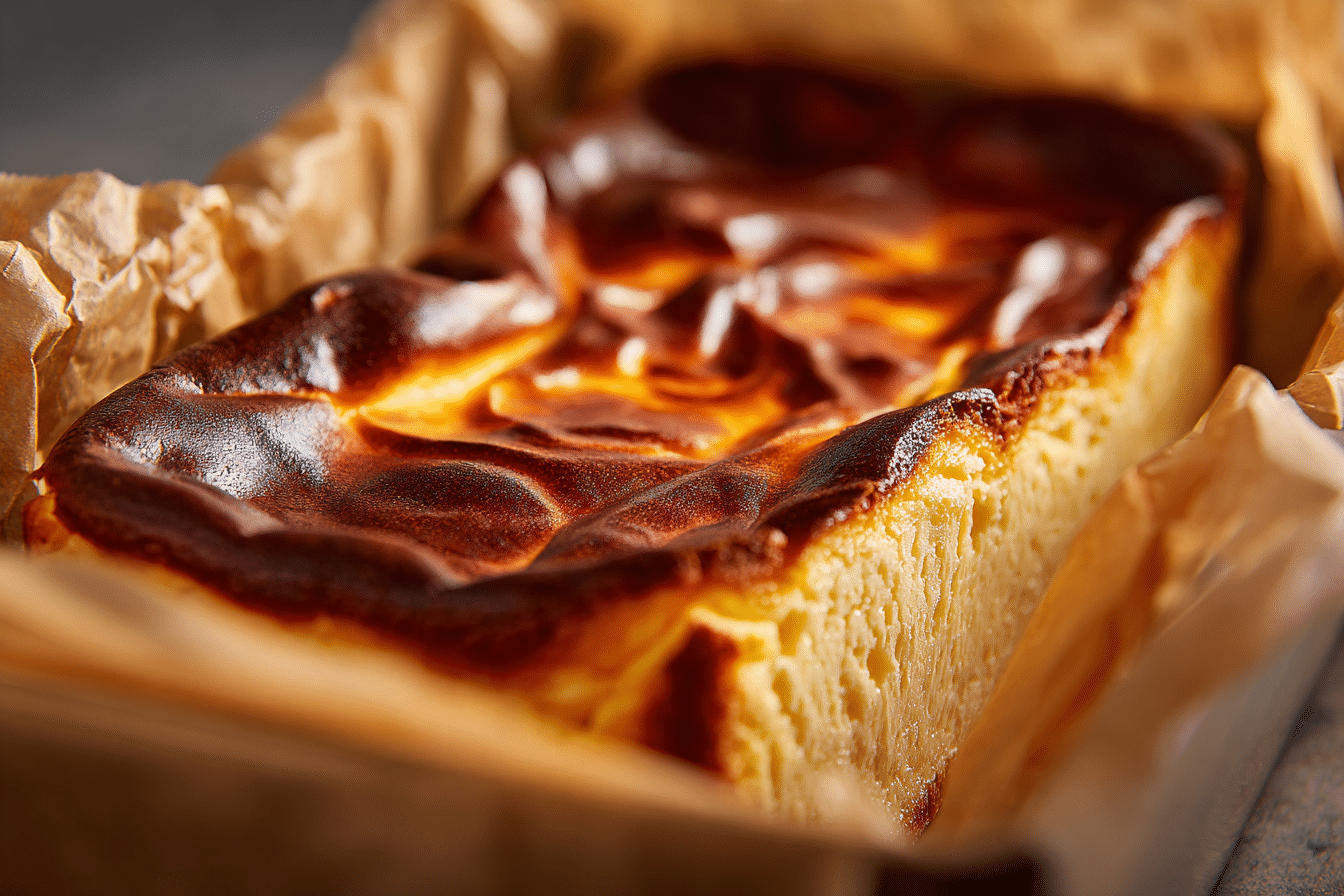
Tucked into a humble loaf pan, this cheesecake bakes up with a stunningly blistered surface and an irresistibly soft center. Each slice reveals a custardy interior that trembles slightly on the knife, a contrast to the slightly bitter, almost smoky notes of the dark top. It’s the kind of dessert that makes people pause after the first bite.
This smaller version doesn’t skimp on flavor or texture. It’s luscious, velvety, and perfectly sweet, with a touch of salt to pull it all together. Whether you’re baking for a quiet night in or want an impressive but easy treat for guests, this loaf pan-sized Basque cheesecake delivers on both comfort and elegance. And best of all—it’s nearly foolproof.
Ingredients Overview
Cream Cheese – The foundation of this cheesecake, cream cheese delivers a dense, creamy texture and mild tang. Use full-fat cream cheese for the best consistency and richness. Avoid whipped versions, which won’t hold structure. If needed, mascarpone can be used, though it’s milder and slightly sweeter.
Granulated Sugar – This balances the tang of the cream cheese and helps develop the dark, caramelized top during baking. Don’t reduce it too much—it’s essential to achieve that deep, almost burnt flavor. You can use superfine sugar for easier blending, but regular granulated works beautifully.
Heavy Cream – Adds luscious silkiness and lightens the density of the cream cheese. Don’t substitute with milk—it lacks the fat content necessary for structure and flavor. If you’re in a pinch, crème fraîche or sour cream can work, but expect a tangier bite.
Eggs – These provide the structure that holds the cheesecake together. Use large eggs at room temperature so they incorporate evenly into the batter. Cold eggs can cause the batter to split.
All-Purpose Flour – Just a touch helps set the cheesecake and gives it a slightly custardy body. You can substitute with cornstarch or a gluten-free 1:1 blend if needed.
Optional additions include a pinch of salt or a splash of vanilla extract, but the beauty of this recipe is in its minimalism. Let the charred top and creamy center shine.
Step-by-Step Instructions
1. Preheat and Prep
Start by preheating your oven to 425°F (220°C). Line a standard loaf pan with parchment paper, ensuring there’s an overhang on all sides. This makes it easy to lift the cheesecake out once it’s done.
2. Soften the Cream Cheese
Place 16 ounces (2 blocks) of full-fat cream cheese in a mixing bowl. Let it come to room temperature—it should be very soft to the touch. Beat it with a hand mixer or stand mixer until smooth and lump-free, about 2–3 minutes.
3. Add Sugar and Eggs
Add 2/3 cup of granulated sugar and beat until fully incorporated. The mixture should look glossy and smooth. Crack in 3 large eggs, one at a time, beating well after each addition. Scrape down the sides to ensure everything blends evenly.
4. Incorporate Cream and Flour
Pour in 1 cup of heavy cream and continue mixing until the batter is silky. Sift in 1 tablespoon of all-purpose flour and beat briefly to combine. Don’t overmix after the flour goes in.
5. Pour and Smooth
Transfer the batter into the prepared loaf pan. Tap it gently on the counter to release any air bubbles and smooth the top with a spatula.
6. Bake Until Burnt
Place the loaf pan on the center rack and bake for 35–40 minutes. The top should be deeply golden to dark brown—almost blackened in spots. The center will jiggle like barely set custard when you shake the pan. Don’t overbake; it will continue to set as it cools.
7. Cool and Chill
Let the cheesecake cool in the pan at room temperature for at least 1 hour. Then transfer it (still in the parchment) to the fridge and chill for 4 hours or overnight. The chilling step is essential—it firms up the creamy center and enhances the flavor.
8. Slice and Serve
Once chilled, lift the cheesecake out using the parchment overhang. Use a warm knife to slice—it cuts cleaner through the soft, creamy center. Serve plain or with a dusting of powdered sugar.
Tips, Variations & Substitutions
-
Pan Size: Standard loaf pans (8.5×4.5″) are perfect for this scaled-down version. If using a slightly larger pan, check for doneness 5 minutes earlier.
-
Don’t Fear the Burn: That scorched top is intentional—it adds depth and contrast. Bake until you see dark splotches form.
-
For a Lighter Version: Swap out 1/3 cup of the cream cheese for Greek yogurt. The result will be slightly tangier and less dense.
-
Gluten-Free Option: Substitute the flour with 1 tablespoon of cornstarch or a gluten-free blend.
-
Add a Twist: A bit of orange zest or a splash of almond extract can add an unexpected pop of flavor.
-
Mini Cheesecakes: Use muffin tins and reduce bake time to 20–25 minutes for individual servings.
Serving Ideas & Occasions
This loaf pan Basque cheesecake is wonderfully versatile. Serve it cold for a creamy finish or let it sit at room temperature for 20 minutes to intensify its custard-like quality.
Pair it with fresh berries or a drizzle of honey for a subtle sweetness contrast. It’s a natural match with espresso, dark roast coffee, or a glass of dry sherry.
Perfect for small dinner parties, birthday treats, or a cozy weekend bake—it’s the kind of dessert that feels intimate and special without requiring fancy techniques.
Bring it to a brunch and watch it disappear, or slice it thick and serve after a hearty meal to end on a truly indulgent note.
Nutritional & Health Notes
While this burnt Basque cheesecake leans into decadence, it’s made with straightforward ingredients—no artificial fillers or stabilizers.
Each slice delivers a rich dose of calcium and protein from the cream cheese and eggs. It’s also naturally gluten-light with minimal flour, making it easier to adapt for gluten-sensitive diets.
For a lower-carb version, swap the sugar with a trusted 1:1 sugar substitute, though the caramelization might be less pronounced.
This dessert is meant to be savored slowly—each bite is creamy, bold, and deeply satisfying.
FAQs
Can I use a different pan if I don’t have a loaf pan?
Yes, you can use an 8-inch round cake pan or even mini ramekins. Just keep in mind the baking time will vary. Thinner batter will cook faster and may not get the same depth of color on top.
Why is the top of my cheesecake not dark enough?
Your oven may run cool. Make sure it’s preheated fully to 425°F and position the pan on the center rack. You can also broil it for 1–2 minutes at the end to deepen the color—but watch it closely to avoid burning.
Do I need a water bath?
Not for this style. The high heat and parchment paper help it rise and set beautifully without cracks. The rustic, cracked top is part of its charm.
Can I freeze this cheesecake?
Yes, once it’s fully chilled and firm, wrap it tightly in plastic and then foil. It freezes well for up to 2 months. Thaw in the fridge overnight before serving.
How do I know when it’s done baking?
The edges should be set, and the center should still have a jiggle when gently shaken. The top should be richly browned or even black in spots—that’s the signature look.
What’s the best way to store leftovers?
Store slices in an airtight container in the fridge. It keeps well for 4–5 days. The flavor often improves after a day as it settles and develops.
Can I add toppings or sauces?
You can, though it’s rich enough to shine solo. Try a spoonful of sour cherry compote, caramel drizzle, or a sprinkle of sea salt flakes for a sophisticated finish.
Easy Burnt Basque Cheesecake You Can Bake in a Loaf Pan
This Burnt Basque Cheesecake fits perfectly in a standard loaf pan, delivering a creamy, custardy interior with a dramatic caramelized top. Easy to make, deeply indulgent, and perfect for small gatherings or everyday cravings.
- Prep Time: 10 minutes
- Cook Time: 40 minutes
- Total Time: 4 hours 50 minutes (including chilling)
- Yield: 8 slices 1x
Ingredients
16 oz full-fat cream cheese, room temperature
2/3 cup granulated sugar
3 large eggs, room temperature
1 cup heavy cream
1 tbsp all-purpose flour
Instructions
-
Preheat oven to 425°F (220°C). Line a standard loaf pan with parchment paper, leaving overhang on all sides.
-
In a large bowl, beat cream cheese until smooth.
-
Add sugar and beat until combined.
-
Add eggs one at a time, beating well after each.
-
Pour in heavy cream and beat until smooth.
-
Sift in flour and mix just until incorporated.
-
Pour batter into prepared loaf pan and smooth the top.
-
Bake for 35–40 minutes, or until the top is deeply browned and the center jiggles slightly.
-
Cool at room temperature for 1 hour, then chill in the fridge for at least 4 hours or overnight.
-
Lift out using parchment, slice with a warm knife, and serve.
Notes
Let the cheesecake sit at room temperature for 20 minutes before serving for a creamier texture.