
No-knead ciabatta with a light and airy crumb is the kind of bread that looks like it came from a rustic bakery but comes together in your own kitchen with barely any effort. With its signature open crumb, crispy crust, and chewy interior, ciabatta is beloved for its texture—and this version doesn’t even require kneading.
The dough is high-hydration, which creates those gorgeous air pockets and a soft, billowy bite. All you need is flour, water, salt, and yeast, and a little patience. The result? A loaf that’s crusty on the outside, tender on the inside, and absolutely perfect for dipping, slicing, or sandwiching.
This method uses a long fermentation instead of kneading, which not only simplifies things but also deepens the flavor naturally. It’s hands-off, forgiving, and delivers bakery-quality results every time.
Ingredients Overview
This no-knead ciabatta uses just a few ingredients, but each one has an essential role in creating the bread’s texture and flavor.
Bread flour is the base of the recipe. With its higher protein content, it gives the dough strength and structure, helping form those large holes in the crumb. If you only have all-purpose flour, it will still work, but the crumb may be slightly less open.
Water hydrates the dough and activates the gluten. Use lukewarm water—around 100°F—to help the yeast do its job without overheating. The high water ratio makes the dough very sticky, which is key to ciabatta’s signature light texture.
Instant yeast gives the dough its rise. Just a small amount is needed since the long fermentation does most of the work. Active dry yeast can be used as well—just dissolve it in warm water before adding.
Salt enhances the flavor and strengthens the dough during fermentation. It also helps control the yeast activity so the dough doesn’t rise too fast.
That’s it—just four ingredients. There’s no fat, sugar, or dairy, which keeps the bread pure and focused on texture.
Optional additions include a drizzle of olive oil in the pan for a golden base, or a dusting of flour or semolina on the surface for extra crunch.
Step-by-Step Instructions
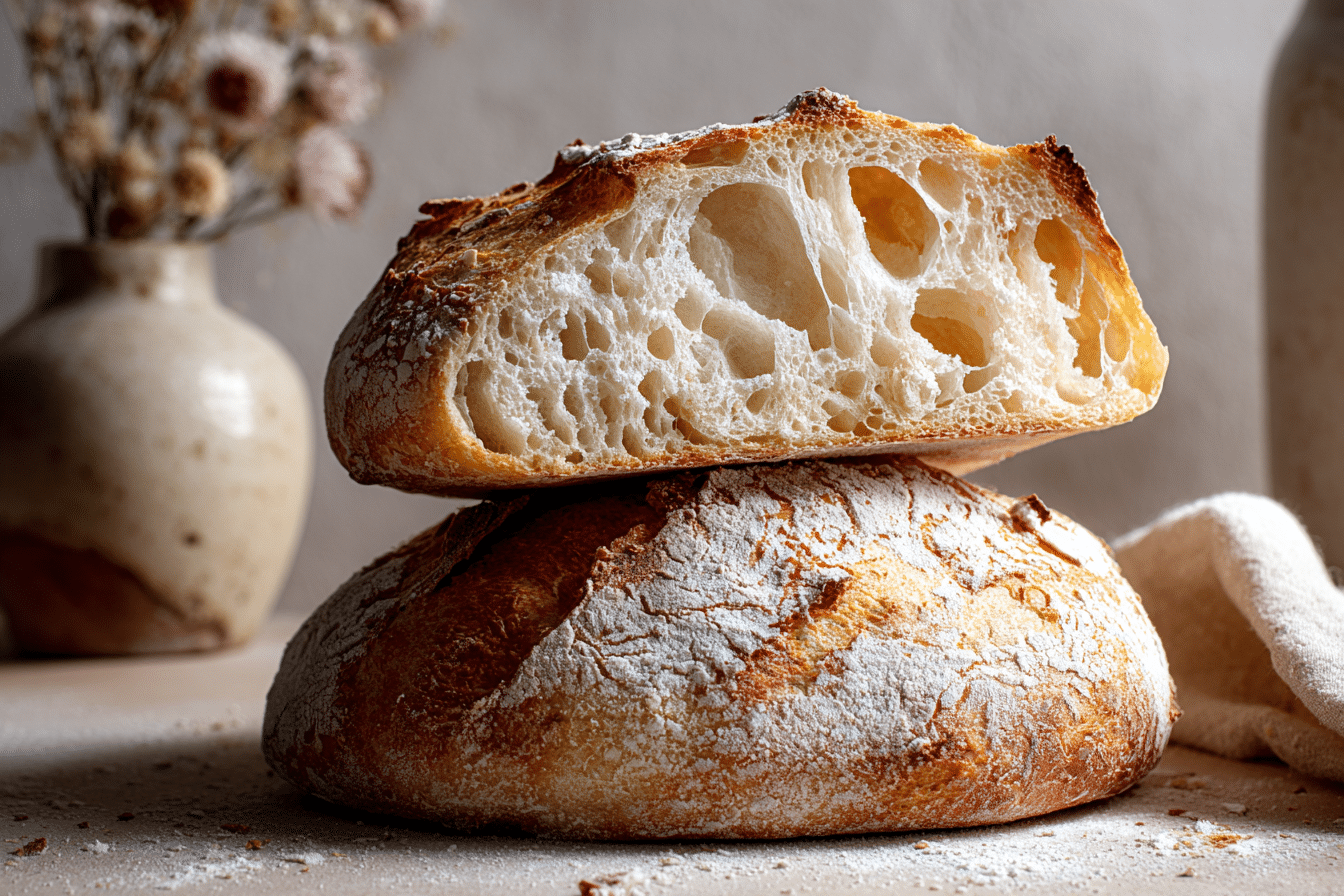
Step 1: Mix the Dough
In a large bowl, whisk together 3 1/4 cups (400g) bread flour, 1 1/2 teaspoons salt, and 1/4 teaspoon instant yeast. Pour in 1 1/2 cups (360g) lukewarm water. Stir with a wooden spoon or spatula until a sticky, shaggy dough forms.
Scrape down the sides and cover the bowl with plastic wrap or a clean towel. Let it rest at room temperature for 12 to 18 hours. Overnight works perfectly.
Step 2: Prepare the Work Surface
Once the dough is bubbly and doubled in size, generously flour a work surface. Gently scrape the dough out of the bowl, being careful not to deflate it. Flour your hands and the top of the dough to make handling easier.
Step 3: Shape the Dough
Using floured hands or a bench scraper, gently stretch the dough into a rough rectangle. Don’t press it down—handle it lightly to preserve the air bubbles.
Fold the dough once or twice like a letter to create tension, then flip it seam-side down. Let it rest for 30 minutes uncovered.
Step 4: Second Rise
Place a piece of parchment paper on a baking sheet or tray. Sprinkle it with flour or semolina. Transfer the dough onto the paper. Cover loosely with a towel and let rise for another 45–60 minutes, until puffed but not doubled.
Meanwhile, preheat your oven to 450°F (232°C). Place a baking stone or inverted baking sheet inside to heat up if you want extra crust.
Step 5: Bake the Ciabatta
When the dough is ready, slide the parchment and dough directly onto the preheated surface. Bake for 20–25 minutes, until the crust is golden brown and crisp. The loaf should sound hollow when tapped.
Let it cool on a wire rack for at least 30 minutes before slicing. This rest helps set the crumb and keeps it from turning gummy.
Tips, Variations & Substitutions
Tips for Best Texture:
-
Don’t add extra flour to the dough—its wetness is key to the airy crumb.
-
Handle it gently during shaping to preserve the gas bubbles.
-
Bake on a preheated surface for the crispiest crust.
Flavor Variations:
-
Add chopped olives, roasted garlic, or fresh rosemary to the dough before the first rise for a savory version.
-
Swirl in sun-dried tomatoes or a sprinkle of coarse sea salt on top just before baking.
Flour Substitutions:
-
If you don’t have bread flour, all-purpose will work, though the holes will be a bit smaller.
-
Whole wheat flour can be used for up to 25% of the flour to add a nutty taste and more fiber.
Yeast Swaps:
-
Active dry yeast works, but dissolve it in the warm water first and let sit for 5 minutes before mixing.
Serving Ideas & Occasions
This no-knead ciabatta is incredibly versatile. Its light crumb and crisp crust make it ideal for a wide variety of meals.
Serve warm slices with olive oil and balsamic vinegar for dipping. Use it as the base for bruschetta or crostini. It also makes a beautiful sandwich loaf—think grilled veggies, fresh mozzarella, and pesto.
Cut it into cubes for croutons or tear into chunks for panzanella salad. For breakfast, toast and spread with butter, jam, or even smashed avocado and sea salt.
Ciabatta works well for dinner parties, charcuterie boards, or a simple accompaniment to soups and stews.
Nutritional & Health Notes
Ciabatta is low in fat and has no added sugar, making it a clean and simple option compared to many store-bought breads.
Because it’s made with white flour, it doesn’t offer much fiber on its own, but pairing it with proteins, vegetables, or healthy fats can make a balanced meal.
The long fermentation helps develop flavor naturally and may make the bread easier to digest for some people. It’s naturally dairy-free and vegan-friendly.
Each slice offers energy from carbs and a small amount of protein. While it’s not intended to be a low-carb bread, it’s an excellent choice for those who enjoy fresh, whole-ingredient baking.
FAQs
How is ciabatta different from other bread?
Ciabatta has a higher hydration dough, which creates a light, airy crumb with large holes. It also has a thinner, crispier crust and a chewy bite, unlike sandwich bread or baguettes.
Why is my dough so sticky?
It’s supposed to be! The wet dough is what creates the open crumb. Don’t try to knead it like traditional dough—just mix and let it ferment.
Can I shorten the rise time?
You can try a warm-proofing method, but longer fermentation gives better flavor and texture. If in a rush, use more yeast (up to 1 tsp) and rise for 4–6 hours total.
Can I bake it in a Dutch oven?
Yes—shape the dough on parchment and drop it into a preheated Dutch oven. Bake covered for 20 minutes, then uncovered for 10 more to brown.
How do I store ciabatta?
Store at room temperature in a paper bag for 1–2 days. For longer storage, freeze the loaf once cool and slice as needed.
Can I use sourdough starter instead of yeast?
Absolutely. Replace the yeast with 1/2 cup of active starter and reduce the water slightly. The process takes longer but adds amazing flavor.
Why didn’t I get big holes in the bread?
Common reasons include using too much flour, handling the dough too aggressively, or underproofing. Stick with a high hydration dough and gentle shaping.
No-Knead Ciabatta Bread with Open, Airy Texture
This no-knead ciabatta delivers a light, airy crumb and crispy crust with just four simple ingredients and an overnight rise. Perfect for sandwiches, dipping, or fresh-from-the-oven snacking.
- Prep Time: 10 minutes
- Cook Time: 25 minutes
- Total Time: 13 hours (includes resting)
- Yield: 1 large loaf 1x
Ingredients
3 1/4 cups (400g) bread flour
1 1/2 tsp salt
1/4 tsp instant yeast
1 1/2 cups (360g) lukewarm water
Instructions
-
Mix flour, salt, and yeast in a large bowl. Add water and stir until a sticky dough forms.
-
Cover and let rise at room temperature for 12–18 hours.
-
Flour a surface. Gently turn out dough and shape into a rectangle. Let rest 30 minutes.
-
Transfer to parchment-lined tray and rest 45–60 minutes.
-
Preheat oven to 450°F.
-
Slide dough (on parchment) onto hot baking stone or tray.
-
Bake 20–25 minutes until golden and crusty.
-
Cool on a wire rack at least 30 minutes before slicing.
Notes
Use bread flour for best structure.
Handle dough gently to keep air bubbles intact.
Optional: Add olives, herbs, or garlic for flavor variation.