
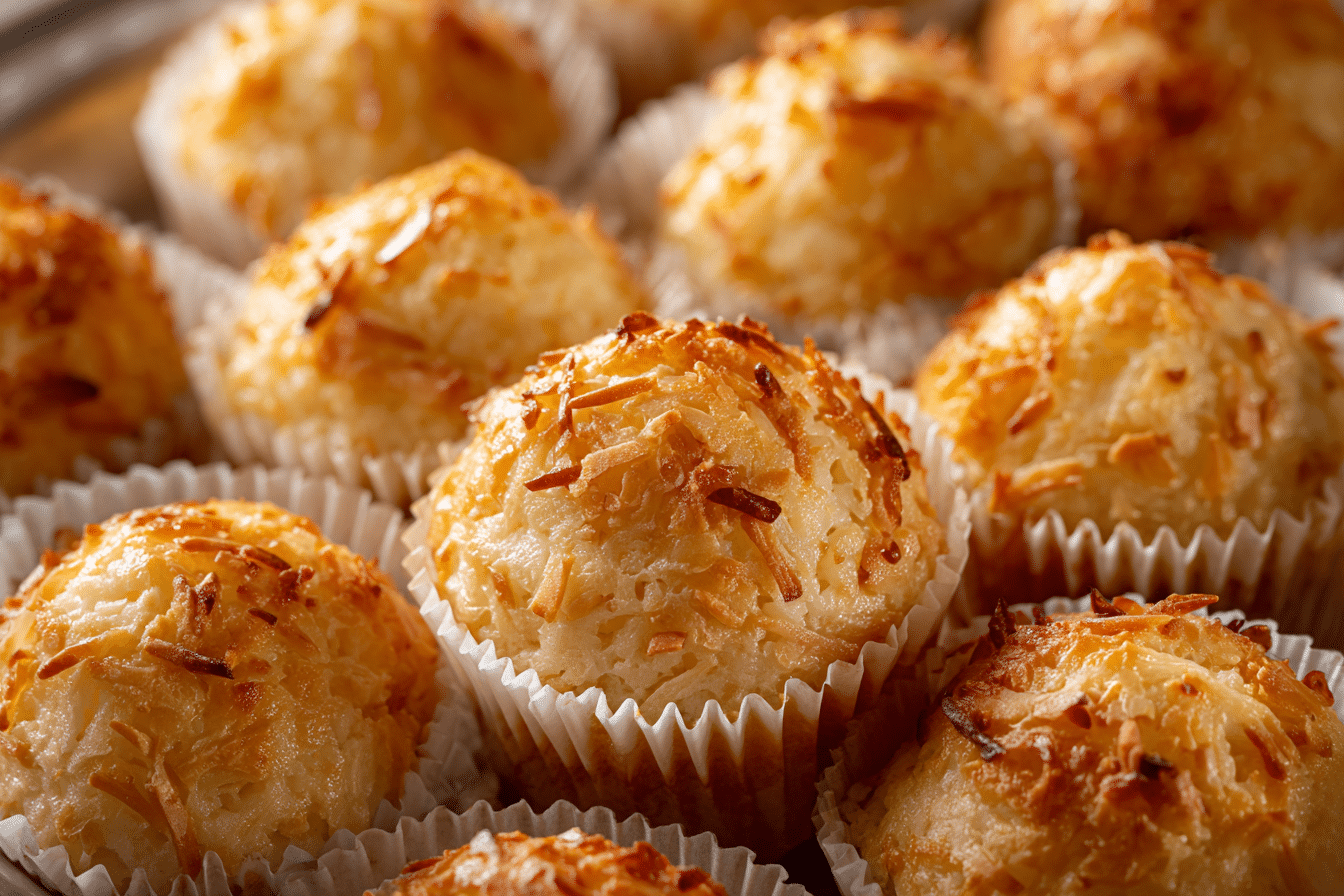
Portuguese baking has a way of wrapping bold flavors in simple, humble packages—and these Best Portuguese Coconut Cakes are no exception. Known in some regions as “Bolo de Coco” or “Queijadinha,” these tender cakes are irresistibly moist, gently sweet, and filled with the tropical aroma of fresh coconut.
Typically baked in individual portions, these cakes are dense but soft, with golden edges and a chewy, custard-like center. The magic lies in the combination of eggs, sugar, coconut milk, and shredded coconut, which caramelize beautifully during baking. A light syrup poured over the top while still warm gives them a glistening finish and seals in the moisture.
Whether served with espresso after dinner or enjoyed as an afternoon snack, these coconut cakes speak to the heart of Portuguese comfort baking—simple, flavorful, and impossible to stop at just one.
Ingredients Overview
Each ingredient in this cake serves a distinct and flavorful purpose. These cakes are naturally gluten-free and use pantry staples often found in Portuguese households.
Grated Coconut – The star of the show. Unsweetened grated coconut adds both chew and rich flavor. You can use sweetened shredded coconut, but reduce the sugar slightly if you do. Fresh coconut can also be used if grated finely.
Coconut Milk – Adds moisture and reinforces the coconut flavor. Use full-fat canned coconut milk for the richest texture. Avoid light versions, which may result in a watery batter.
Sweetened Condensed Milk – This replaces both sugar and some of the dairy, giving a creamy, fudgy finish that holds the cake together.
Eggs – Provide structure, richness, and a slight custardy texture. Use large, room-temperature eggs for best results.
Butter – Melted butter adds depth and helps the edges of the cakes turn golden and slightly crispy. Unsalted is ideal, but salted works if that’s what you have.
Sugar – Only a small amount is needed, especially if using sweetened condensed milk. It helps with caramelization.
Vanilla Extract or Lemon Zest – Vanilla is traditional, but some recipes use lemon zest to brighten the flavor. You can choose based on your preference.
Syrup (Optional) – A simple sugar syrup brushed over the warm cakes keeps them moist and adds a glistening finish. Infuse it with lemon peel or cinnamon stick for extra depth.
These cakes are wonderfully adaptable. For a dairy-free version, replace butter with coconut oil and use dairy-free condensed milk. For a more eggy, flan-like texture, increase the eggs by one.
Step-by-Step Instructions
-
Preheat and prepare your tins.
Preheat your oven to 350°F (175°C). Grease a 12-cup muffin tin or line it with parchment liners. You can also use mini tart pans or ramekins for a more traditional presentation. -
Mix the coconut base.
In a large bowl, combine 1 can sweetened condensed milk, 1 cup full-fat coconut milk, 2 tablespoons melted butter, and 3 large eggs. Whisk until fully blended and smooth. -
Add dry ingredients.
Stir in 1½ cups grated coconut and ¼ cup granulated sugar. Mix well until the batter is thick and evenly textured. Add 1 teaspoon vanilla extract or 1 teaspoon lemon zest, depending on your flavor choice. -
Portion the batter.
Divide the batter evenly between muffin cups, filling about ¾ of the way full. Tap the pan gently to remove air bubbles and smooth the tops with a spoon. -
Bake.
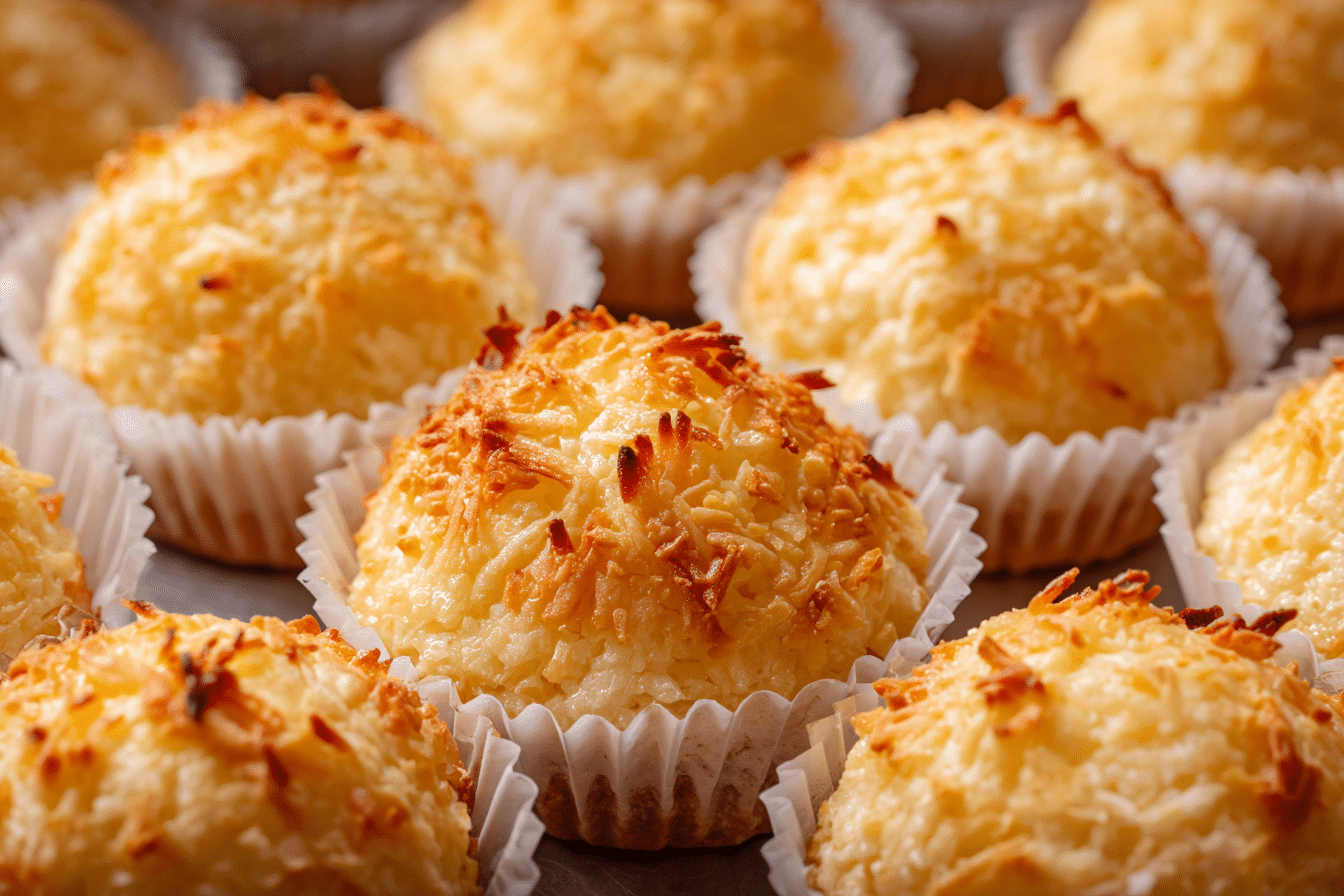
Bake for 25–30 minutes, or until the tops are golden brown and the edges begin to pull away from the sides. The centers should still be slightly soft but set. -
Prepare syrup (optional).
While the cakes bake, simmer ½ cup water with ¼ cup sugar and a strip of lemon peel or cinnamon stick until slightly thickened. Let cool slightly. -
Brush with syrup.
While the cakes are still warm, brush or spoon the syrup over the tops. Let the cakes cool in the pan for 10 minutes, then transfer to a rack to cool completely.
Avoid overbaking—these cakes are meant to be custardy and moist. A slightly jiggly center is ideal. Letting them cool helps them set further.
Tips, Variations & Substitutions
Tips:
-
Use silicone muffin pans or well-greased molds for easy release.
-
For a more golden crust, use turbo or demerara sugar sprinkled on top before baking.
-
Let the cakes rest before unmolding—they firm up as they cool.
Flavor Variations:
-
Add a pinch of cinnamon or nutmeg to the batter for warmth.
-
Fold in finely chopped pineapple or mango for a tropical twist.
-
Swap vanilla for almond extract for a nutty depth.
Substitutions:
-
Coconut oil instead of butter for a dairy-free option.
-
Evaporated milk in place of coconut milk for a milder coconut flavor.
-
If you don’t have sweetened condensed milk, use 1 cup cream + ¾ cup sugar, cooked until thick.
Add-ins:
-
Top with toasted coconut flakes for a crunchier finish.
-
Add chopped toasted cashews or almonds to the batter.
These little cakes are versatile, delicious warm or cold, and travel well—perfect for gifting or potlucks.
Serving Ideas & Occasions
These cakes shine during afternoon tea or as a sweet finish to a seafood dinner. In Portugal, they’re often served during holidays and family celebrations, especially in the Azores and Madeira.
They pair wonderfully with:
-
Fresh espresso or strong coffee
-
Sweet Madeira or Port wine
-
Tropical fruit salads or grilled pineapple
Serve them warm for the softest texture, or chilled for a firmer, flan-like consistency. Top with a dusting of powdered sugar or a spoonful of whipped cream for added elegance.
These also work beautifully on dessert platters, buffets, or picnics. Their small size makes them easy to portion and transport.
Nutritional & Health Notes
These Portuguese coconut cakes are rich in natural fats from coconut and eggs, which give them their luxurious mouthfeel. A single portion is quite satisfying, making them ideal for controlled indulgence.
Naturally gluten-free, they’re suitable for those avoiding wheat. The coconut provides dietary fiber, while the eggs offer protein and essential vitamins.
To make them a bit lighter:
-
Use unsweetened coconut milk and reduce added sugar.
-
Swap some condensed milk for low-fat evaporated milk.
-
Skip the syrup for a less sweet finish.
While high in calories compared to sponge cakes, these treats are simple, whole-food based, and free from preservatives.
Enjoy in moderation, and they can fit easily into a balanced lifestyle.
FAQs
1. Are these cakes gluten-free?
Yes, they’re naturally gluten-free. There’s no flour—just coconut, eggs, and milk, making them a great option for those avoiding wheat.
2. Can I make them ahead of time?
Absolutely. They keep well in the fridge for up to 4 days. You can also freeze them for up to a month—just thaw and warm slightly before serving.
3. What’s the difference between Bolo de Coco and Queijadinha?
Both are coconut-based Portuguese treats, but Queijadinha often includes cheese (like Parmesan or fresh cheese), while Bolo de Coco is strictly coconut and dairy.
4. Can I use fresh coconut instead of dried?
Yes, but make sure it’s grated finely. Fresh coconut has more moisture, so you may want to reduce the coconut milk slightly to compensate.
5. Do I need to refrigerate them?
If not serving the same day, it’s best to refrigerate due to the dairy and eggs. Serve cold or let them come to room temperature before enjoying.
6. Why are my cakes too runny in the middle?
They may be underbaked. Bake until the edges are golden and firm, but don’t overcook—the centers should still be a little soft, like a baked custard.
7. Can I make this as one large cake?
Yes, you can bake it in a pie dish or 8-inch cake pan. Extend baking time to 40–45 minutes, and let cool fully before slicing.
Best Portuguese Coconut Cakes for Coffee or Tea Time
Moist, chewy, and deeply flavorful, these Best Portuguese Coconut Cakes are baked in individual portions with sweetened condensed milk, coconut milk, and grated coconut. A golden top and soft custardy center make them an irresistible treat.
- Prep Time: 10 minutes
- Cook Time: 30 minutes
- Total Time: 40 minutes
- Yield: 12 mini cakes 1x
Ingredients
1 (14 oz) can sweetened condensed milk
1 cup full-fat coconut milk
2 tbsp melted butter
3 large eggs
1½ cups unsweetened grated coconut
¼ cup granulated sugar
1 tsp vanilla extract or 1 tsp lemon zest
Optional syrup:
½ cup water
¼ cup sugar
Lemon peel or cinnamon stick
Instructions
-
Preheat oven to 350°F (175°C). Grease or line a 12-cup muffin tin.
-
In a bowl, mix condensed milk, coconut milk, melted butter, and eggs. Whisk until smooth.
-
Add grated coconut, sugar, and vanilla or lemon zest. Stir to combine.
-
Fill muffin cups ¾ full with the batter.
-
Bake for 25–30 minutes until golden and set.
-
Optional: Simmer water, sugar, and peel or cinnamon for 5–7 minutes to make syrup.
-
Brush syrup over cakes while warm. Let cool before serving.
Notes
Let cakes rest before unmolding for clean edges. For extra texture, top with toasted coconut.