
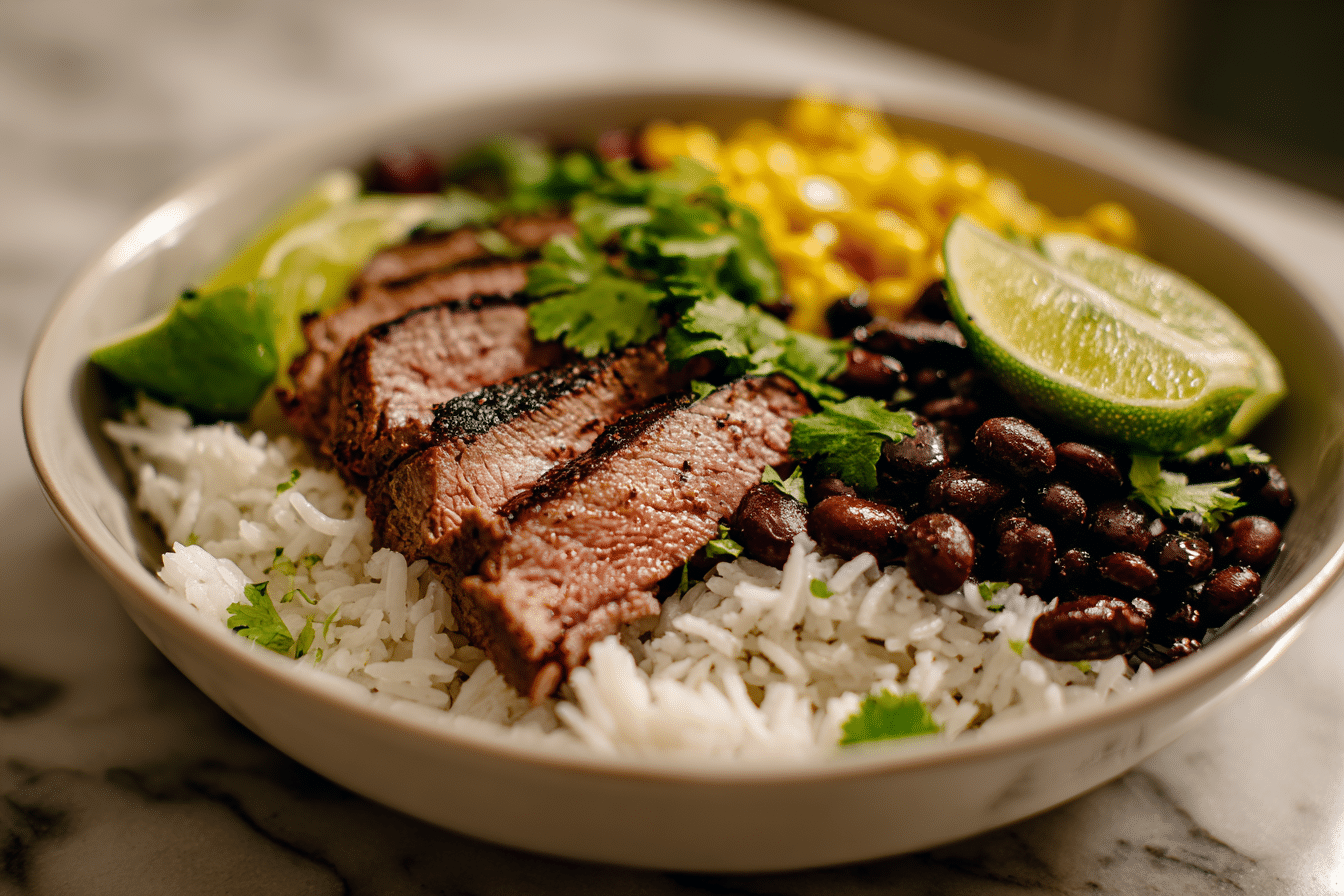
Cilantro Lime Steak Bowls combine marinated beef, citrus brightness, warm grains, and layered toppings in a single satisfying bowl. Each element works together to form a balanced meal where savory steak, fluffy rice, beans, and crisp vegetables come together with a light lime-herb profile.
The steak is coated in a lime-based marinade that brings acidity, aroma, and depth. Once cooked, it is sliced thin and placed over rice so juices naturally soak into grains. This method creates a cohesive base that carries flavor through each bite.
Fresh toppings such as avocado, corn, tomato, and onion introduce contrast in texture and taste. Cilantro adds herbal freshness while a creamy sauce rounds out acidity from lime. Cilantro Lime Steak Bowls fit well into weeknight cooking thanks to flexible ingredients and straightforward preparation steps.
Ingredients Overview
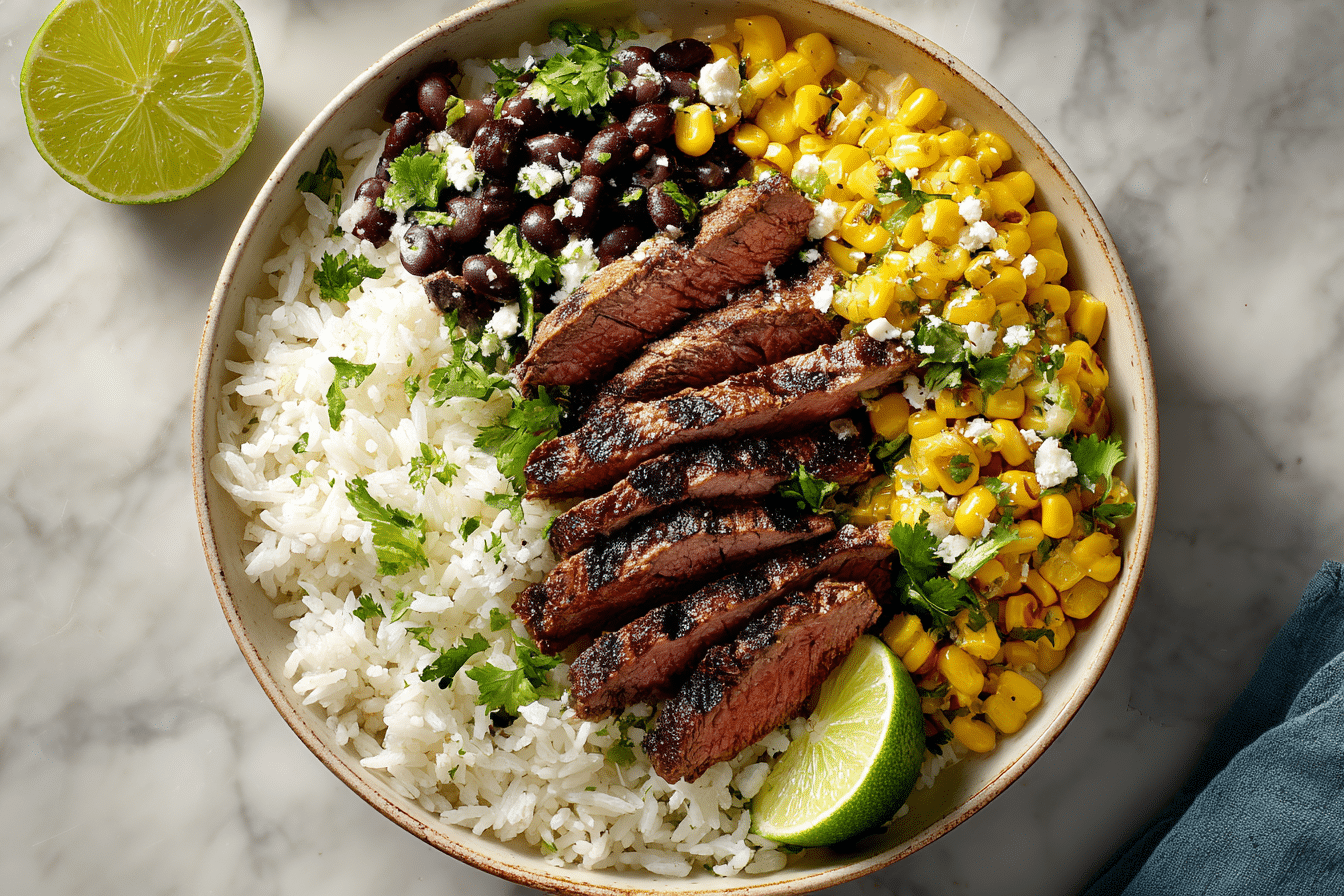
Cilantro Lime Steak Bowls rely on a balance between protein, starch, vegetables, and a citrus-forward marinade. The steak acts as the main component. Flank steak or skirt steak works well since both cuts respond well to quick, high-heat cooking and absorb marinade efficiently.
Lime juice is central to the marinade. It adds brightness and helps tenderize surface fibers in beef. Olive oil carries seasoning across the meat and supports browning during cooking. Garlic adds depth, while cumin and chili powder provide warmth and mild spice. Cilantro contributes herbal freshness that ties flavors together.
Rice forms the base layer and absorbs juices from steak and toppings. Jasmine rice, white rice, or brown rice can be used based on preference. Beans such as black beans add texture and plant-based protein while complementing seasoning in steak.
Toppings complete the bowl. Corn adds sweetness, tomatoes bring light acidity, avocado gives creaminess, and red onion adds sharp crunch. Lettuce provides a crisp layer that balances warm ingredients. A yogurt or sour cream sauce softens citrus notes and adds smooth texture.
Each part has a clear role, and the structure allows easy adjustments without changing overall character. Protein, grain, and toppings can shift based on preference while maintaining balance.
Ingredients
1 1/2 pounds flank steak
3 tablespoons olive oil
1/4 cup fresh lime juice
2 cloves garlic, minced
1 teaspoon ground cumin
1/2 teaspoon chili powder
1/2 teaspoon salt
1/4 teaspoon black pepper
1/4 cup chopped cilantro
2 cups cooked rice
1 cup black beans, rinsed
1 cup corn kernels
1 cup cherry tomatoes, halved
1 avocado, sliced
1/2 cup shredded lettuce
1/4 cup sour cream or plain yogurt sauce
1/4 cup diced red onion
Step-by-Step Instructions
Begin by mixing marinade ingredients in a bowl. Combine olive oil, lime juice, garlic, cumin, chili powder, salt, black pepper, and cilantro. Stir until mixture looks evenly blended and aromatic.
Place steak in a shallow dish or sealed bag. Pour marinade over beef, coating all sides. Refrigerate for at least one hour so flavors can absorb into surface layers. Longer resting time can deepen seasoning.
Heat a skillet or grill pan over medium-high heat. Remove steak from marinade and allow excess liquid to drip away. Place steak in hot pan and cook until a browned crust forms. Flip once to cook second side evenly. Aim for a seared exterior while keeping interior tender.
Transfer cooked steak to a cutting board and allow it to rest for several minutes. Resting helps redistribute juices inside meat. Slice steak thinly against grain so fibers shorten and texture remains soft.
Prepare serving bowls by adding warm rice as a base. Add black beans and corn beside rice. Place sliced steak across top so juices mix into grains.
Add toppings including tomatoes, avocado, lettuce, and red onion. Spoon yogurt or sour cream sauce over bowl. Sprinkle cilantro for aroma and color.
Avoid overcooking steak since firmness increases quickly with excess heat. Proper slicing direction and resting time play a major role in texture quality. Assemble bowls while rice and steak are warm for best structure.
Tips, Variations & Substitutions
Different beef cuts such as skirt steak or sirloin can replace flank steak. Sirloin creates a leaner result while skirt steak adds richer texture. All options respond well to quick searing and thin slicing.
Rice can be replaced with quinoa or cauliflower rice depending on dietary preference. Quinoa adds extra protein and a slightly nutty flavor. Cauliflower rice reduces starch content while still supporting toppings and steak.
Vegetable toppings can shift based on availability. Roasted peppers, grilled zucchini, or pickled onions add variety in flavor and texture. Spice level can be adjusted by increasing or reducing chili powder.
For dairy-free preparation, replace sour cream with mashed avocado or plant-based sauce. Leftover steak stores well and can be reused in salads, wraps, or sandwiches.
Serving Ideas & Occasions
Cilantro Lime Steak Bowls work well for casual dinners, meal prep, or shared meals where customization matters. Each person can adjust toppings and portion size based on preference.
Side options include tortilla chips, roasted vegetables, or light salads. Beverage pairings such as lime water or unsweetened iced tea match citrus notes in dish.
This meal fits weekday cooking as well as relaxed weekend meals due to flexible ingredients and straightforward assembly. Warm base ingredients combined with fresh toppings create balanced contrast in each serving.
Nutritional & Health Notes
Cilantro Lime Steak Bowls provide a mix of protein, carbohydrates, fiber, and fats. Steak supplies protein and iron. Rice or grains provide energy through carbohydrates. Beans contribute plant protein and fiber.
Vegetables such as tomatoes, corn, and lettuce add vitamins and natural freshness. Avocado provides healthy fats that support fullness. Lime-based marinade adds strong flavor without heavy sauces.
Portion adjustments can shift balance toward lighter or more filling meals. Increasing vegetables while reducing rice lowers carbohydrate load. Each component can be adjusted without changing structure.
FAQs
What type of steak works well for this recipe?
Flank steak and skirt steak are common choices due to their ability to absorb marinade and cook quickly. Both cuts become tender when sliced thin against grain. Sirloin also works well for a leaner result. Resting after cooking keeps juices inside meat, which improves texture in finished bowl.
How long should steak stay in marinade?
One hour gives solid flavor absorption. Several hours can deepen seasoning even more. Very long marination is not necessary. Lime juice begins soft surface breakdown, so moderate timing gives balanced taste and texture.
Can preparation happen ahead?
Yes, many parts can be prepared earlier. Rice, beans, and chopped vegetables can be stored separately. Steak can also be cooked ahead and reheated gently. Final assembly is best done close to serving time so textures stay distinct.
What replaces cilantro if preferred?
Parsley offers mild herbal flavor without strong citrus notes. Green onion can also be used for freshness. Lime juice still provides brightness even without cilantro, so overall balance remains steady.
Can rice be replaced?
Quinoa, cauliflower rice, or farro all work well. Quinoa adds protein, cauliflower rice creates a lighter base, and farro adds chewiness and nutty tone. Each option supports toppings and steak effectively.
What keeps steak tender?
Resting after cooking allows juices to settle inside meat. Slicing against grain shortens fibers, improving bite quality. Avoiding overcooking also plays a major role in maintaining tenderness.
What toppings pair well?
Avocado, corn, tomatoes, lettuce, and red onion all work well. These ingredients add freshness, crunch, and contrast. Creamy sauce helps balance lime and spice from marinade.