
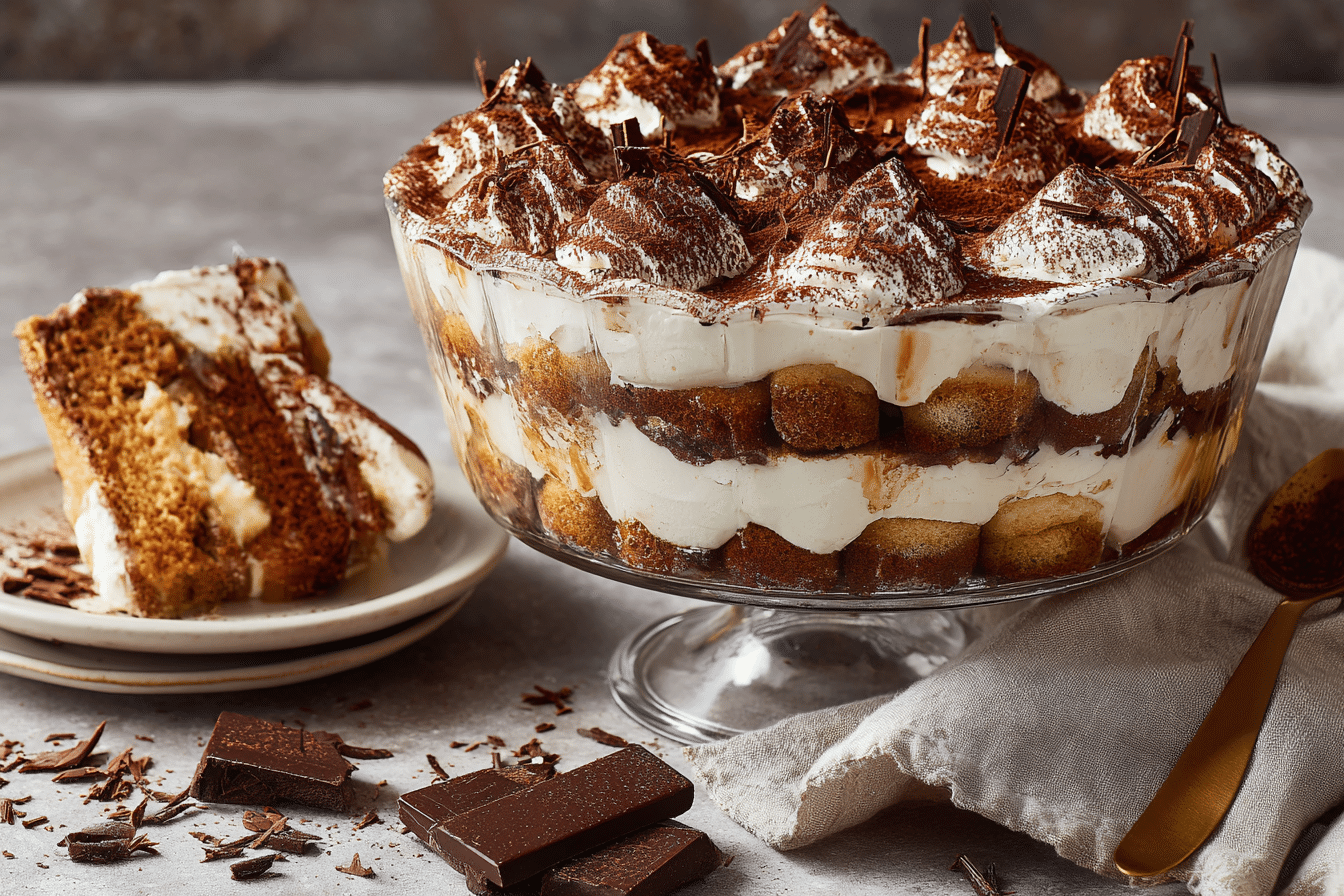
Tiramisu is Italy’s most iconic dessert, and for good reason. Silky mascarpone cream, espresso-soaked ladyfingers, and a dusting of cocoa powder come together to create something that’s both rich and airy, indulgent and refreshing. The name “tiramisu” means “pick me up,” and that’s exactly what each bite delivers.
This Italian Tiramisu Recipe stays true to tradition: no whipped cream shortcuts, no gelatin, no flavored liqueurs unless you choose to add them. Just the timeless trio of eggs, sugar, and mascarpone whipped into a luscious zabaglione, layered with soft, coffee-soaked ladyfingers and finished with a deep dusting of cocoa.
Perfect for dinner parties, holidays, or whenever you’re craving a dessert that feels both luxurious and nostalgic, this tiramisu melts in your mouth and lingers with hints of espresso and bittersweet chocolate.
Ingredients Overview
Tiramisu is made with a short list of ingredients, but quality is everything. Each one plays a key role in creating the authentic taste and texture.
Mascarpone Cheese: The star of the show. Mascarpone is a soft, buttery Italian cheese that gives tiramisu its rich, creamy texture. Make sure it’s fresh and at room temperature for easy blending.
Eggs: Traditional tiramisu uses raw eggs—separating yolks and whites—for a true zabaglione base. Pasteurized eggs are a safe option, or you can gently cook them over a double boiler if preferred.
Granulated Sugar: Whipped with the egg yolks to form the base of the cream. It sweetens without overpowering.
Espresso: Strong, brewed espresso gives tiramisu its signature coffee kick. Let it cool completely before dipping. You can substitute strong coffee, but espresso gives the most intense flavor.
Ladyfingers (Savoiardi): These crisp, dry Italian cookies soften beautifully when dipped in espresso. Don’t soak them—just a quick dip keeps them from getting soggy.
Cocoa Powder: Unsweetened cocoa adds a bittersweet contrast to the sweet mascarpone. Dust generously on top just before serving.
Optional Additions:
-
Marsala wine or dark rum: Adds warmth and complexity to the egg yolk mixture or espresso. Totally optional.
-
Vanilla extract: A tiny splash can round out the flavor of the cream.
Realistic Substitutions:
-
Use cream cheese if mascarpone is unavailable (texture will differ).
-
Swap decaf espresso for a caffeine-free version.
-
Gluten-free ladyfingers work just as well for dietary needs.
Step-by-Step Instructions
1. Prepare the Espresso Mixture:
Brew 1½ cups of strong espresso. Allow to cool completely in a shallow dish. Add 1–2 tablespoons of dark rum or Marsala wine if desired.
2. Separate and Prepare the Eggs:
Separate 4 large eggs into yolks and whites.
In a heatproof bowl, combine the yolks with ½ cup granulated sugar. Whisk over a simmering pot of water (double boiler method) for 5–6 minutes until thickened and pale. Remove from heat and let cool slightly.
In a separate bowl, beat egg whites to stiff peaks. (Alternatively, use ½ cup heavy cream and whip to soft peaks if avoiding raw egg whites.)
3. Make the Mascarpone Cream:
Once the yolk mixture is cool, whisk in 16 oz mascarpone until smooth and creamy. Gently fold in the beaten egg whites (or whipped cream) in batches, preserving the airy texture.
4. Dip and Layer the Ladyfingers:
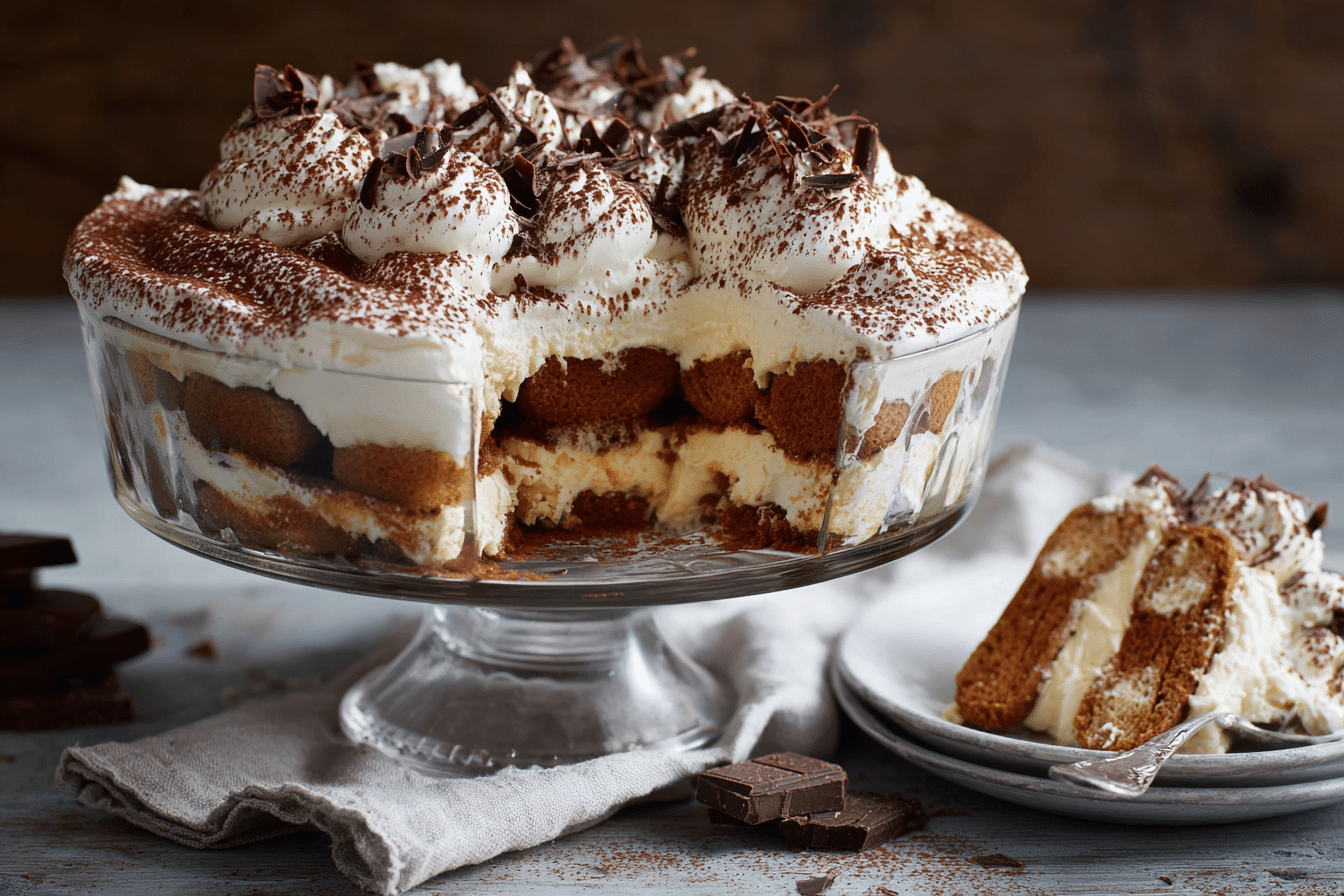
Quickly dip each ladyfinger into the cooled espresso—about 1 second per side—and layer them in a single layer at the bottom of a 9×9-inch dish.
Spread half of the mascarpone mixture over the soaked ladyfingers and smooth the surface.
Repeat with another layer of dipped ladyfingers and the remaining mascarpone cream.
5. Chill and Dust:
Cover with plastic wrap and refrigerate for at least 6 hours, preferably overnight.
Just before serving, dust generously with unsweetened cocoa powder using a fine sieve.
Tips, Variations & Substitutions
Helpful Tips:
-
Don’t over-soak ladyfingers—they’ll fall apart. A quick dip is enough.
-
Chill tiramisu overnight for the best flavor and texture.
-
Use high-quality cocoa powder for the top layer—Dutch-processed or natural both work.
-
Serve straight from the fridge for the cleanest slices.
Variations:
-
Add a layer of shaved dark chocolate between the mascarpone and ladyfingers.
-
Use flavored espresso (hazelnut or vanilla) for a twist.
-
Swap espresso for strong black tea and add rose water for a Mediterranean fusion.
Dietary Substitutions:
-
Use pasteurized eggs or make a cooked custard for safety.
-
Gluten-free ladyfingers make this dessert celiac-friendly.
-
Dairy-free versions can be made with vegan mascarpone alternatives and coconut cream, though flavor and texture will differ.
Serving Ideas & Occasions
Italian Tiramisu is elegant yet relaxed—a dessert equally at home at a rustic dinner or a formal holiday feast.
Serve it with:
-
A shot of espresso or cappuccino for the full Italian café experience
-
A glass of Vin Santo, amaretto, or a sweet dessert wine
-
Fresh berries or a drizzle of chocolate sauce if desired
Best Occasions:
-
Holiday dinners (Christmas, Easter)
-
Romantic dinners or anniversaries
-
Casual weekend meals with family
-
Make-ahead dinner party desserts
Its overnight rest makes it ideal for prepping ahead, saving you time on the day you serve.
Nutritional & Health Notes
While tiramisu is certainly indulgent, it uses simple, whole ingredients. Mascarpone is rich in fat but also provides calcium. Eggs offer protein, and espresso adds flavor without added sugar.
For a lighter version, reduce the sugar slightly and use low-fat mascarpone or Greek yogurt (though the texture will be less creamy). Skipping the alcohol makes it kid-friendly.
Always refrigerate thoroughly and consume within 2–3 days for freshness and food safety, especially with egg-based fillings.
FAQs
1. Can I make tiramisu without raw eggs?
Yes. Either use pasteurized eggs or gently cook the yolks over a double boiler with sugar, as shown above. You can also replace whipped egg whites with whipped cream.
2. How long does tiramisu last in the fridge?
Tiramisu keeps well in the refrigerator for 2–3 days, covered tightly. The texture gets better on day two.
3. Can I freeze tiramisu?
Yes, freeze it tightly wrapped (before cocoa dusting) for up to one month. Thaw in the refrigerator overnight and dust with cocoa before serving.
4. Why is my tiramisu runny?
Overmixed mascarpone, warm ingredients, or under-whipped eggs/cream can cause this. Make sure ingredients are at the right temperature and gently fold everything.
5. Can I make it alcohol-free?
Absolutely. Skip the rum or Marsala entirely. Use plain espresso or a splash of vanilla extract for extra flavor.
6. What if I can’t find mascarpone?
You can make a substitute with cream cheese, heavy cream, and a little sour cream blended together, though it won’t be quite as rich.
7. Is tiramisu gluten-free?
Not by default, but you can make it gluten-free by using certified gluten-free ladyfingers. The rest of the ingredients are naturally gluten-free.
Classic Italian Tiramisu Recipe That’s Easy and Elegant

A classic no-bake Italian dessert with espresso-dipped ladyfingers and rich mascarpone cream, finished with a cocoa powder topping.
- Prep Time: 25 minutes
- Cook Time: 5 minutes (zabaglione)
- Total Time: 6+ hours (with chilling)
- Yield: 9 servings
Ingredients
Eggs – 4 large, separated
Granulated sugar – ½ cup
Mascarpone cheese – 16 oz, room temperature
Espresso – 1½ cups, cooled
Ladyfingers (savoiardi) – 24–30
Cocoa powder – for dusting
Optional: dark rum or Marsala – 2 tbsp
Optional: vanilla extract – ½ tsp
Instructions
-
Brew espresso and let cool. Add rum if using.
-
Whisk egg yolks and sugar over a double boiler until thick and pale. Let cool.
-
Beat egg whites to stiff peaks.
-
Mix mascarpone into cooled yolk mixture until smooth. Fold in egg whites gently.
-
Quickly dip ladyfingers in espresso. Layer half in a 9×9 dish.
-
Spread half the mascarpone mixture on top. Repeat layers.
-
Cover and chill for at least 6 hours or overnight.
-
Dust with cocoa powder before serving.
Notes
Use pasteurized eggs or replace whites with whipped cream for safety. Best served cold.