
A soft, airy sponge cake layered with fresh whipped cream and juicy strawberries—Japanese Strawberry Shortcake is the very picture of elegance and simplicity. Unlike the dense American version, this dessert is beloved across Japan for its feather-light texture, subtle sweetness, and refined presentation. Whether you’re baking for a birthday, a holiday, or simply to bring joy to a weekend tea time, this cake promises to delight without overwhelming the palate.
A Slice of Japanese Celebration
Japanese Strawberry Shortcake (ショートケーキ, “shōtokēki”) is not your typical Western shortcake. Originating in Japan during the early 20th century, it was heavily inspired by French pâtisserie and British sponge cakes but developed its own unique identity. Its rise to popularity coincided with the growing availability of strawberries and dairy after World War II, becoming a symbol of Western luxury in Japanese households.
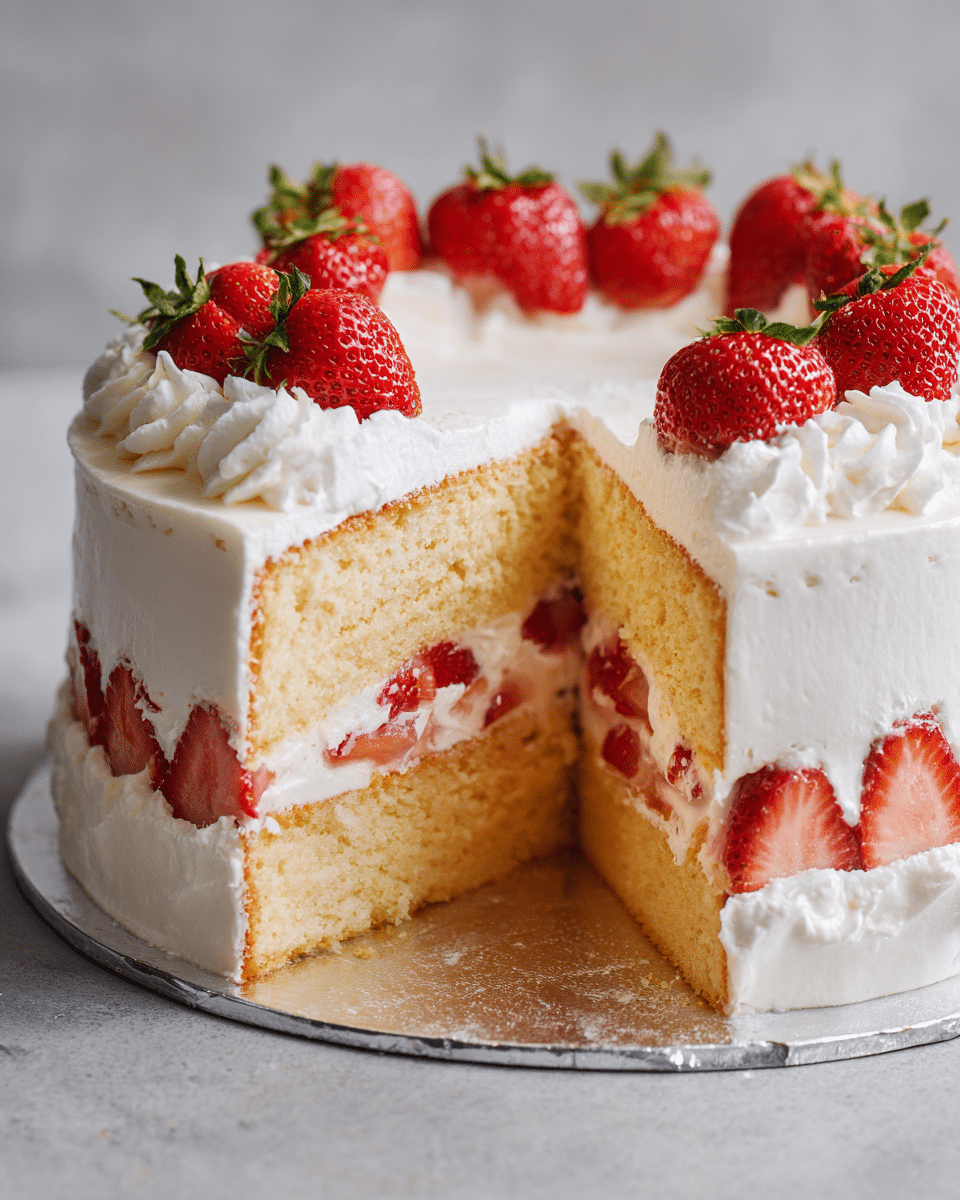
Today, it’s the quintessential birthday and Christmas cake in Japan. You’ll find it in every high-end bakery, department store food hall, and café—topped with whipped cream peaks and glistening strawberries, often arranged with meticulous care. The beauty of this cake lies in its harmony: light sponge, barely sweetened cream, and fresh fruit. It’s a dessert that celebrates balance.
Let’s walk through how to make this beautiful cake from scratch with professional tips to help you achieve that signature soft, cloud-like texture and an appearance worthy of a Japanese patisserie window.
Ingredients Overview: Building the Perfect Layers
Each component in a Japanese Strawberry Shortcake serves a precise purpose. Here’s what you’ll need and why each ingredient matters:
Sponge Cake Base (Genoise Style)
-
Eggs (room temperature): The backbone of the sponge. Beaten with sugar until pale and tripled in volume, eggs provide both structure and rise without the use of baking powder.
-
Granulated Sugar: Sweetens the batter and helps stabilize the egg foam during whisking.
-
Cake Flour: Lower in protein than all-purpose flour, cake flour gives the sponge its characteristic softness and fine crumb.
-
Milk (warm): Adds moisture and tenderness to the sponge while helping incorporate the fat.
-
Unsalted Butter (melted): Just a touch is folded in at the end to provide richness without weighing the sponge down.
-
Vanilla Extract: Enhances flavor and rounds out the egginess of the batter.
Whipped Cream Filling & Frosting
-
Heavy Cream (36-40% fat): Use high-fat cream for the most stable, fluffy whipped topping. Japanese versions often include a touch of mascarpone for stability, but it’s optional.
-
Powdered Sugar: Dissolves easily into the cream and sweetens it without grittiness.
-
Vanilla Extract: Adds aroma and depth to the cream.
Strawberry Layer
-
Fresh Strawberries: Select ripe, red berries with a uniform shape. Medium-sized strawberries work best for slicing into layers and decorating the top.
Step-by-Step Instructions: Mastering the Japanese Sponge
Step 1: Prepare Your Baking Tools
-
Preheat oven to 340°F (170°C).
-
Line the bottom of a 7-inch (18 cm) round cake pan with parchment paper. Do not grease the sides.
-
Prepare a water bath or warm your eggs in a bowl set over a pot of warm water for best volume during whipping.
Step 2: Make the Sponge Batter
-
Whisk Eggs and Sugar:
-
In a large bowl, beat 3 large eggs and 90g granulated sugar using a hand mixer over warm water until pale and thick. This takes about 8–10 minutes. The batter should fall in ribbons.
-
-
Sift and Fold:
-
Sift 90g cake flour over the egg mixture in two additions. Gently fold using a spatula or balloon whisk to avoid deflating.
-
-
Incorporate Milk & Butter:
-
Mix 20g melted butter and 30ml warm milk with a spoonful of the batter, then fold it gently back into the main bowl.
-
-
Pour and Bake:
-
Pour into the prepared pan and tap gently to remove air bubbles.
-
Bake for 25–30 minutes until golden brown and springy.
-
-
Cool and Slice:
-
Turn out onto a cooling rack. Once completely cool, slice into two or three equal layers using a serrated knife.
-
Step 3: Whip the Cream
-
Chill Equipment:
-
Use a chilled bowl and whisk for best results.
-
-
Whip the Cream:
-
Whisk 400ml heavy cream with 40g powdered sugar and 1 tsp vanilla extract until medium-stiff peaks form.
-
Step 4: Assemble the Cake
-
Layer One:
-
Place the first sponge layer on a turntable. Spread a layer of whipped cream and scatter sliced strawberries over it.
-
-
Layer Two:
-
Top with another cake layer. Repeat cream and strawberry filling.
-
-
Top Layer:
-
Add final sponge layer. Cover the entire cake with a thin crumb coat, then chill for 15 minutes.
-
-
Final Frosting:
-
Spread a smooth final layer of cream. Use an offset spatula for clean edges.
-
-
Decorate:
-
Pipe rosettes or dollops and crown with whole strawberries.
-
Tips, Variations, and Substitutions
Pro Tips for Success
-
Use Warm Eggs: Warm eggs whip better and hold more air. Don’t skip this step.
-
Don’t Overfold: Stop mixing as soon as the flour disappears to keep the batter airy.
-
Use a Cake Collar: For sharp sides, use acetate when assembling your cake.
-
Chill Before Serving: Letting the cake rest in the fridge for 2–4 hours improves texture and flavor blending.
Variations
-
Mascarpone Whipped Cream: For added stability and richness, replace ¼ cup of cream with mascarpone.
-
Matcha Twist: Add 1 tsp of matcha powder to the sponge for a green tea variation.
-
Peach or Mango: Swap strawberries for ripe peaches or mango slices in summer months.
Dietary Substitutions
-
Gluten-Free: Use a finely milled gluten-free cake flour blend.
-
Dairy-Free: Use coconut cream for whipping and dairy-free margarine for the sponge.
Serving Ideas & Occasions
-
Birthday Cakes: This is the birthday cake of choice in Japan, often adorned with chocolate plaques and candles.
-
Christmas Dessert: A Japanese tradition. Pair with a glass of sparkling sake or tea.
-
Tea Parties or Showers: Its delicate appearance makes it perfect for bridal or baby showers.
-
Meal Prep: Bake the sponge a day ahead and assemble the cake the day of for best results.
Serve chilled, with extra strawberries or a drizzle of berry coulis if desired.
Nutritional & Health Notes
This cake is lighter than many Western-style layer cakes:
-
Lower Sugar: The sponge is subtly sweetened, letting the fruit shine.
-
Fresh Fruit: Strawberries are high in vitamin C and antioxidants.
-
Airy Texture: Because the sponge is made without baking powder, it relies on whipped eggs, resulting in fewer fats and calories than butter-heavy cakes.
Approximate Per Slice (1/8 cake):
-
Calories: 280–320
-
Protein: 4g
-
Fat: 18g
-
Carbohydrates: 26g
-
Sugar: 18g
It’s indulgent, but far from heavy.
Frequently Asked Questions
1. What makes Japanese strawberry shortcake different from American shortcake?
Japanese shortcake uses a soft sponge cake instead of biscuit dough. The texture is light and airy rather than dense or crumbly. It’s also less sweet and often presented with artistic precision.
2. Can I use store-bought sponge cake?
While possible, homemade sponge is much softer and fresher. Store-bought versions can be dry and won’t absorb cream as beautifully.
3. How do I prevent my whipped cream from deflating?
Use high-fat cream (over 36%) and chill your bowl and beaters. Avoid overwhipping—stop at medium-stiff peaks. Adding mascarpone or gelatin can help stabilize it.
4. What’s the best way to slice the sponge evenly?
Use a serrated knife and a turntable. Score the edges first, then rotate as you slice. A cake leveler tool can also help.
5. How long does Japanese strawberry shortcake last?
It’s best eaten within 24–36 hours. Store it in an airtight container in the fridge. The cream can soften the sponge over time.
6. Can I freeze this cake?
Freezing is not recommended due to the whipped cream and fresh fruit. However, the sponge alone can be frozen for up to 2 months.
7. Is this cake difficult to make for beginners?
Not at all! While the sponge requires some technique, it’s quite manageable with patience and proper tools. Start with a small 6″ or 7″ cake for practice.
Fluffy Strawberry Whipped Cream Cake – A Japanese Dessert Classic
A light and airy Japanese-style sponge cake layered with whipped cream and fresh strawberries. Perfect for birthdays, holidays, and elegant tea-time treats.
- Prep Time: 30 minutes
- Cook Time: 30 minutes
- Total Time: 1 hour
- Yield: 6–8 servings 1x
Ingredients
Sponge Cake:
-
3 large eggs (room temperature)
-
90g granulated sugar
-
90g cake flour
-
20g unsalted butter (melted)
-
30ml warm milk
-
1 tsp vanilla extract
Whipped Cream:
-
400ml heavy cream (36-40% fat)
-
40g powdered sugar
-
1 tsp vanilla extract
Filling & Topping:
-
12–15 fresh strawberries (hulled and halved or whole for topping)
Instructions
-
Preheat oven to 340°F (170°C). Line a 7-inch round pan with parchment.
-
Warm eggs and sugar over a hot water bath and beat until thick and pale.
-
Sift in flour and fold gently.
-
Mix butter, milk, and a bit of batter, then fold back into the mix.
-
Pour into the pan and bake 25–30 minutes. Cool completely and slice.
-
Whip cream with sugar and vanilla to medium-stiff peaks.
-
Layer sponge with cream and sliced strawberries.
-
Frost the outside and decorate with whole berries. Chill before serving.
Notes
-
Add mascarpone for extra cream stability.
-
Sponge can be made a day ahead.
-
Not suitable for freezing once assembled.