
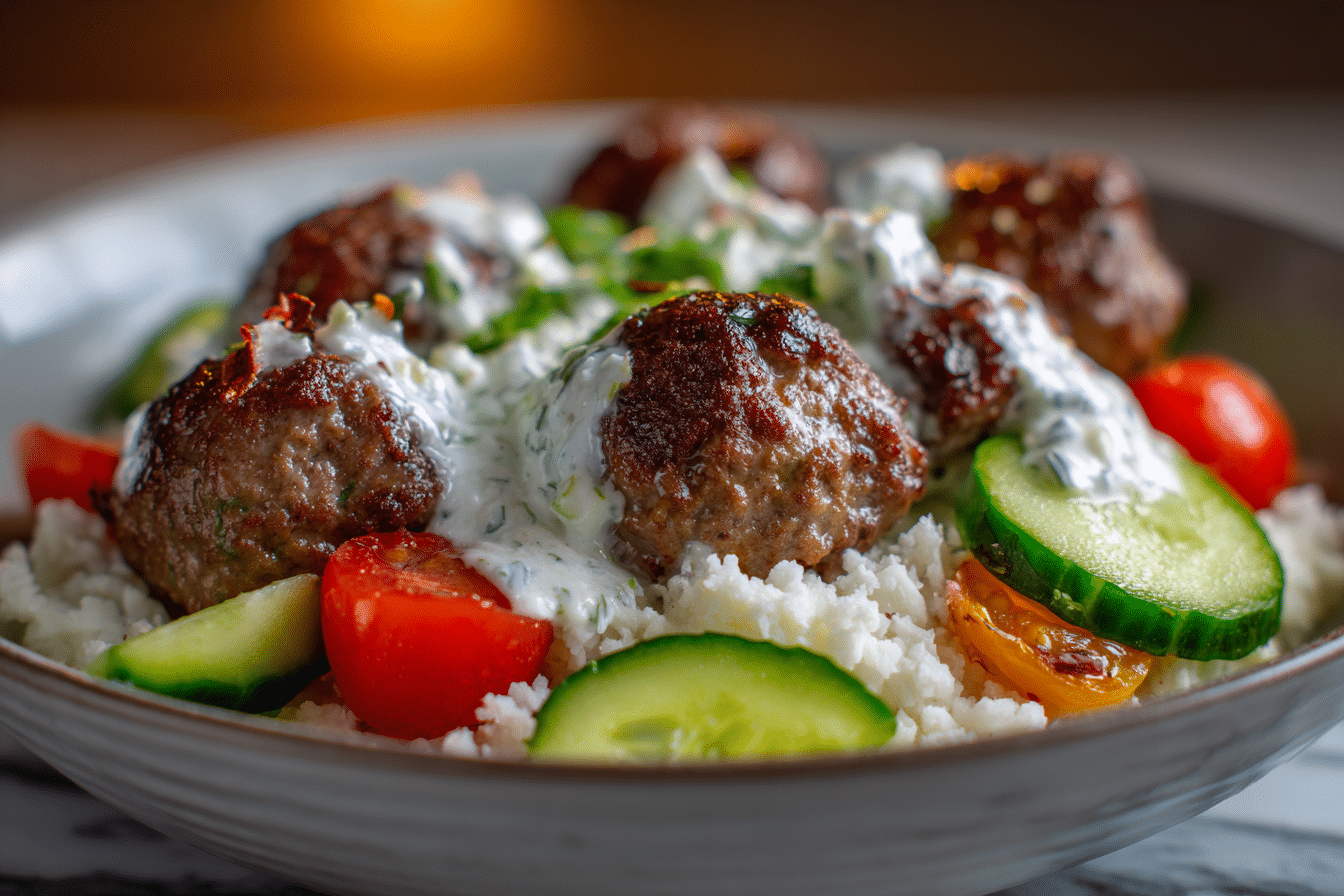
Greek Meatball Bowl Recipe brings together seasoned meatballs, grains, chopped vegetables, and a yogurt-based sauce in a single assembled meal. Each part is prepared separately, then combined at serving time. The result is a balanced plate with warm and cool elements in one bowl.
This style of meal works for planned cooking or same-day preparation. The meatballs provide a savory core, while the grains form a base that holds the remaining components. Vegetables add contrast in texture, and a yogurt sauce ties the ingredients together with a light tang.
Ingredients Overview
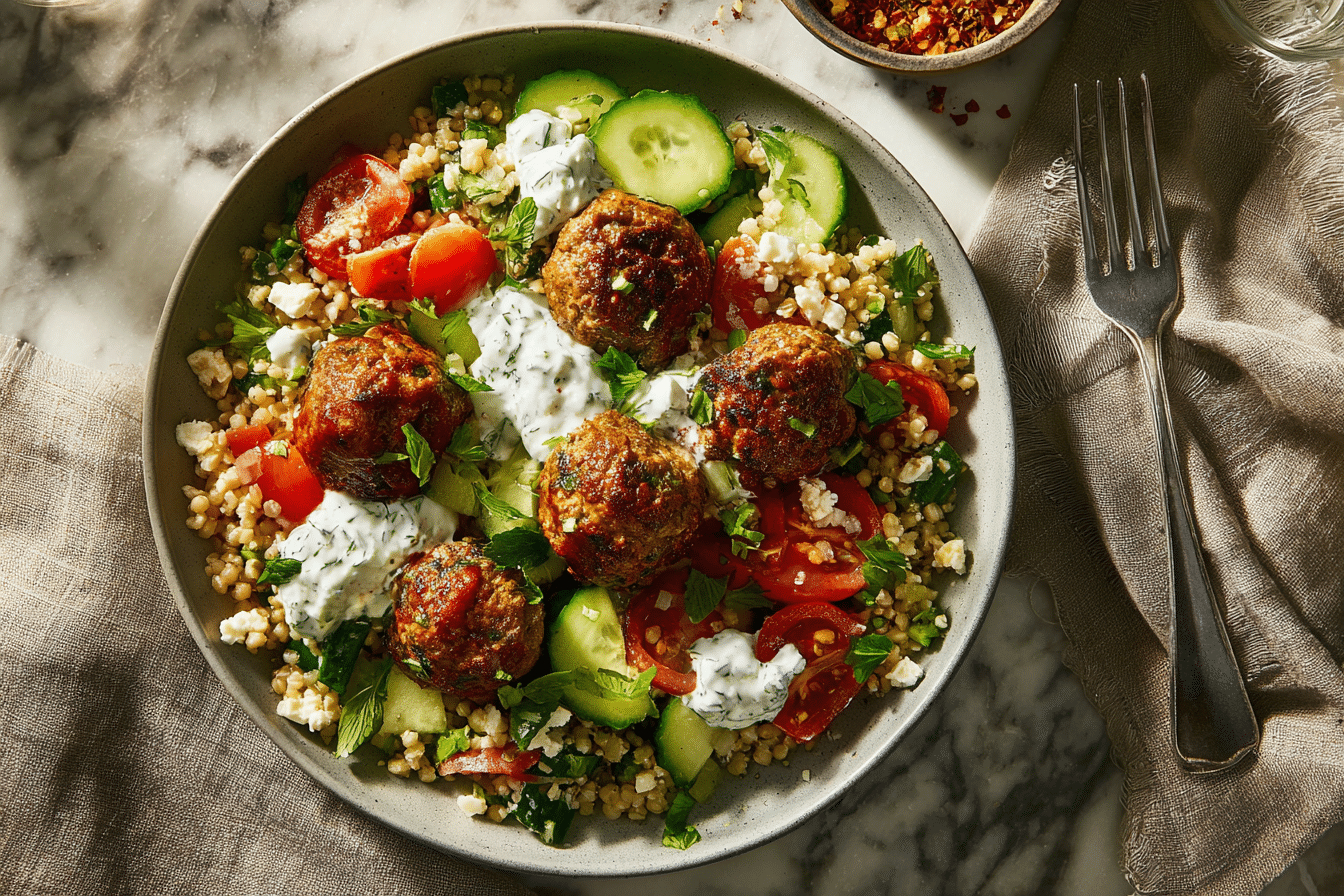
The meat mixture forms the center of this Greek Meatball Bowl Recipe. Ground beef or ground lamb is used for its strong savory profile and soft texture after cooking. Both options respond well to seasoning and hold their shape during pan cooking.
Breadcrumbs and egg are included to bind the mixture. These ingredients help maintain structure so the meatballs stay intact while remaining tender inside. Garlic and onion add depth during cooking, blending into the meat for a layered savory taste. Parsley and oregano contribute herbal notes that align with Mediterranean cooking traditions.
Grains serve as the foundation of the bowl. Rice, quinoa, or couscous are commonly selected. Rice absorbs juices from the meat and sauce. Quinoa adds a slightly firm texture with additional plant protein. Couscous remains light and separates easily, which works well with the other components.
Vegetables provide contrast. Cucumber adds a firm crunch and cool temperature contrast. Tomatoes contribute moisture and mild acidity. Red onion brings sharpness that balances the richer meat and grains. Feta cheese adds a salty and crumbly element that blends into the bowl during eating.
The sauce is made from yogurt combined with lemon juice, garlic, olive oil, salt, and pepper. This mixture creates a smooth coating that connects the components without overpowering them. It adds a light tang and soft texture that works across all ingredients in the bowl.
Ingredients
1 pound ground beef or ground lamb
1/2 cup breadcrumbs
1 egg
2 cloves garlic, minced
1/4 cup onion, finely chopped
2 tablespoons chopped parsley
1 teaspoon dried oregano
1/2 teaspoon salt
1/4 teaspoon black pepper
2 tablespoons olive oil
1 cup cooked rice or quinoa
1 cup cucumber, diced
1 cup cherry tomatoes, halved
1/4 cup red onion, sliced
1/2 cup feta cheese, crumbled
1 cup plain Greek yogurt
1 tablespoon lemon juice
1 garlic clove, grated
1 tablespoon olive oil
Salt as needed
Black pepper as needed
Step-by-Step Instructions
Place ground beef or lamb in a mixing bowl. Add breadcrumbs, egg, garlic, onion, parsley, oregano, salt, and black pepper. Mix until the ingredients are distributed evenly. Handle the mixture gently to avoid compacting the meat.
Shape the mixture into small round portions. Keep each piece similar in size so they cook at the same rate. Set them aside while preparing the pan.
Heat olive oil in a skillet over medium heat. Add the meatballs in a single layer without crowding the pan. Cook for about 8 to 10 minutes, turning them so all sides develop a browned surface. The interior should be fully cooked while remaining moist.
While the meatballs cook, prepare the grain base. Cook rice, quinoa, or couscous according to package directions. Prepare cucumbers, tomatoes, and red onion by cutting them into small pieces suitable for bowl assembly.
In a separate bowl, combine yogurt, lemon juice, grated garlic, olive oil, salt, and pepper. Stir until the texture is uniform and smooth.
To assemble, place grains at the bottom of each bowl. Add meatballs on top, followed by cucumbers, tomatoes, red onion, and feta. Spoon yogurt sauce over the top or serve alongside.
Avoid pressing meatballs during cooking, as this releases internal moisture. Space them evenly in the pan to allow steady browning. Resting them briefly after cooking helps stabilize texture before serving.
Tips, Variations & Substitutions
Ground turkey or chicken can replace beef or lamb for a lighter protein option. These meats have lower fat content, so adding a small amount of olive oil to the mixture helps maintain softness during cooking.
Rice, quinoa, and couscous can be interchanged depending on texture preference. Brown rice adds firmness, quinoa provides a slightly nutty note, and couscous keeps the bowl light in structure. Barley or farro can also be used for a chewier base.
Herbs can be adjusted for different flavor direction. Dill changes the aroma toward a lighter herbal profile, while mint adds a cooling effect. A small amount of chili flakes can be added to the meat mixture for mild heat.
For dairy-free preparation, plant-based yogurt can replace Greek yogurt. Feta can be omitted or substituted with a non-dairy alternative. The bowl still maintains structure through grains, vegetables, and meatballs.
Serving Ideas & Occasions
This Greek Meatball Bowl Recipe works for planned meals or individual servings. Components can be prepared ahead and stored separately, then combined at serving time. This helps maintain texture across ingredients.
It pairs well with warm flatbread or roasted vegetables served alongside. A light soup or leaf-based salad can also accompany the bowl when serving multiple portions.
For group settings, ingredients can be arranged separately so each portion can be assembled individually. This allows adjustment of ingredient balance according to preference.
The dish can be served warm, at room temperature, or slightly cooled, depending on timing and setting.
Nutritional & Health Notes
This meal provides protein from meatballs, carbohydrates from grains, and fats from olive oil and yogurt. The combination supports a balanced intake across macronutrient groups.
Vegetables contribute fiber and moisture, along with vitamins from cucumbers, tomatoes, and onions. Feta adds calcium and salt content, while yogurt supplies protein and a creamy texture without heavy ingredients.
Portions can be adjusted by changing grain quantity or meatball count. Increasing vegetables shifts the balance toward lighter intake, while adding more meat increases protein content. The structure of the bowl allows flexible adjustment without changing preparation method.
FAQs
What type of meat works for this bowl?
Ground beef and ground lamb are commonly used. Beef provides a milder taste, while lamb has a stronger profile. Both maintain shape during cooking and absorb seasoning well. A mix of both meats can also be used for combined flavor characteristics. Ground poultry can replace either option for a leaner result, though moisture levels may require slight adjustment during preparation.
Can the meat mixture be prepared ahead?
The meat mixture can be prepared and stored before cooking. It can remain in refrigeration for a short period while maintaining structure. Shaped meatballs can also be stored separately before cooking. This allows preparation steps to be divided across time, which can reduce workload during final cooking.
Which grain works most effectively?
Rice, quinoa, and couscous are commonly used bases. Rice absorbs sauces and meat juices. Quinoa provides a firmer bite and added plant protein. Couscous remains light and separates easily within the bowl. Each grain changes texture while supporting the same overall structure of the dish.
How is moisture retained in meatballs?
Moisture retention depends on mixing and cooking method. Overmixing can lead to a dense texture, so gentle handling is preferred. Breadcrumbs and egg help maintain internal structure. Cooking over medium heat allows the exterior to brown while the interior remains soft. Resting after cooking helps redistribute internal juices.
Can meatballs be frozen?
Meatballs can be frozen either before or after cooking. Raw shaped meatballs can be frozen on a tray and transferred once firm. Cooked versions should be cooled before freezing. Reheating can be done in a skillet or oven until fully warmed.
What can replace the yogurt sauce?
If yogurt is not available, a mixture of tahini, lemon juice, and garlic can be used. Another option is olive oil with lemon juice and seasoning. These alternatives maintain a coating for the bowl and provide acidity to balance the meat and grains.
Can this meal be used for preparation in advance?
The components can be prepared in advance and stored separately. Meatballs, grains, vegetables, and sauce can each be kept in containers and combined when serving. This helps preserve texture and allows quick assembly when needed.