
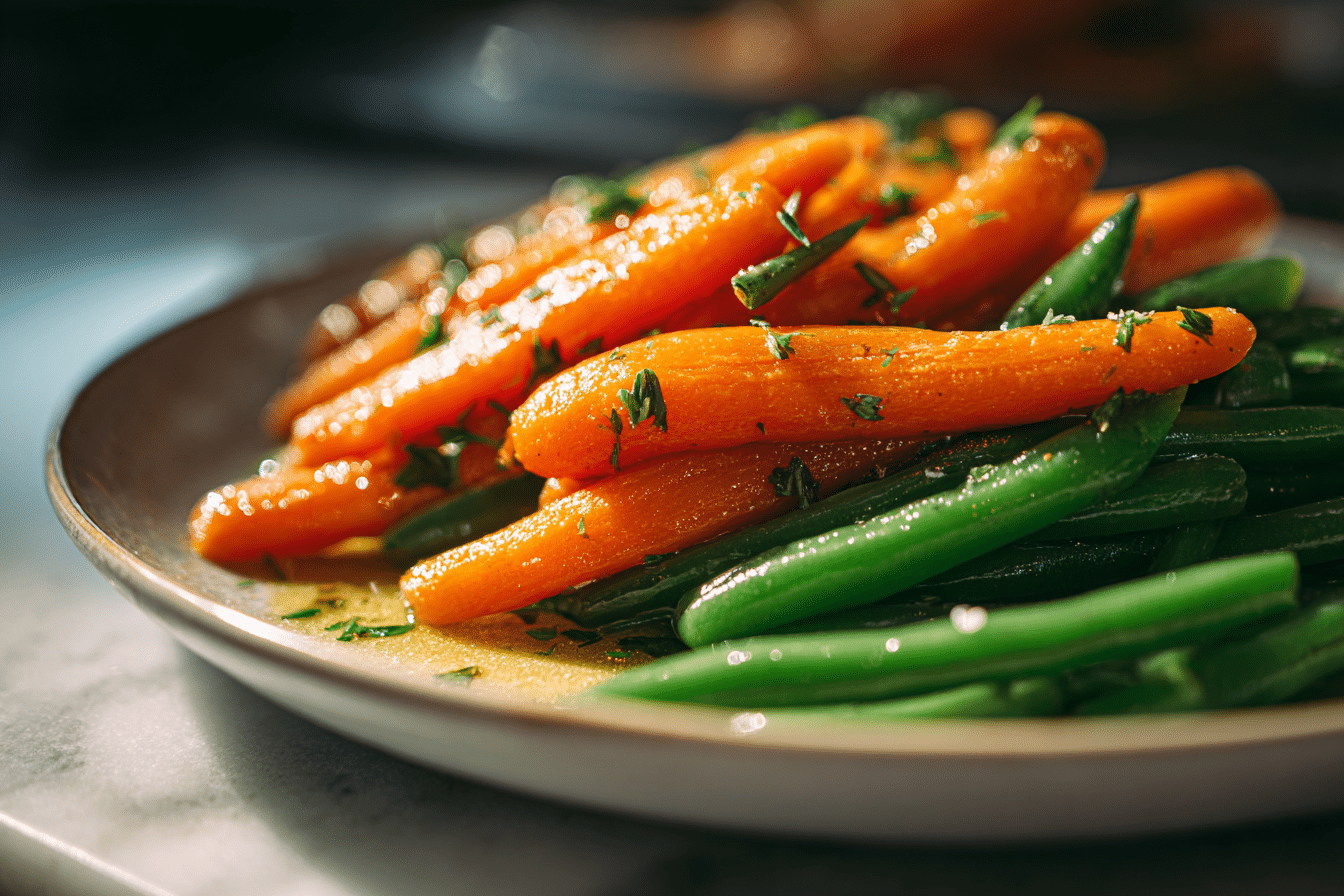
Honey Glazed Carrots & Green Beans brings together two everyday vegetables in a warm pan glaze that coats each piece in a light, glossy finish. Carrots bring gentle sweetness and soft bite, while green beans add a crisp texture that keeps the dish balanced from the first forkful to the last.
This dish is often chosen for its straightforward cooking method and reliable results. A single skillet is enough to bring everything together, and the process moves quickly from raw vegetables to a finished side dish ready to serve alongside many main courses.
The combination of honey, butter, and seasoning creates a light coating that settles over the vegetables without weighing them down. The flavors stay balanced, with sweetness from the carrots and honey supported by mild savory notes from garlic and salt.
This preparation works well for weeknight meals and shared tables, fitting easily into a variety of menus without requiring complex steps or uncommon ingredients.
Ingredients Overview
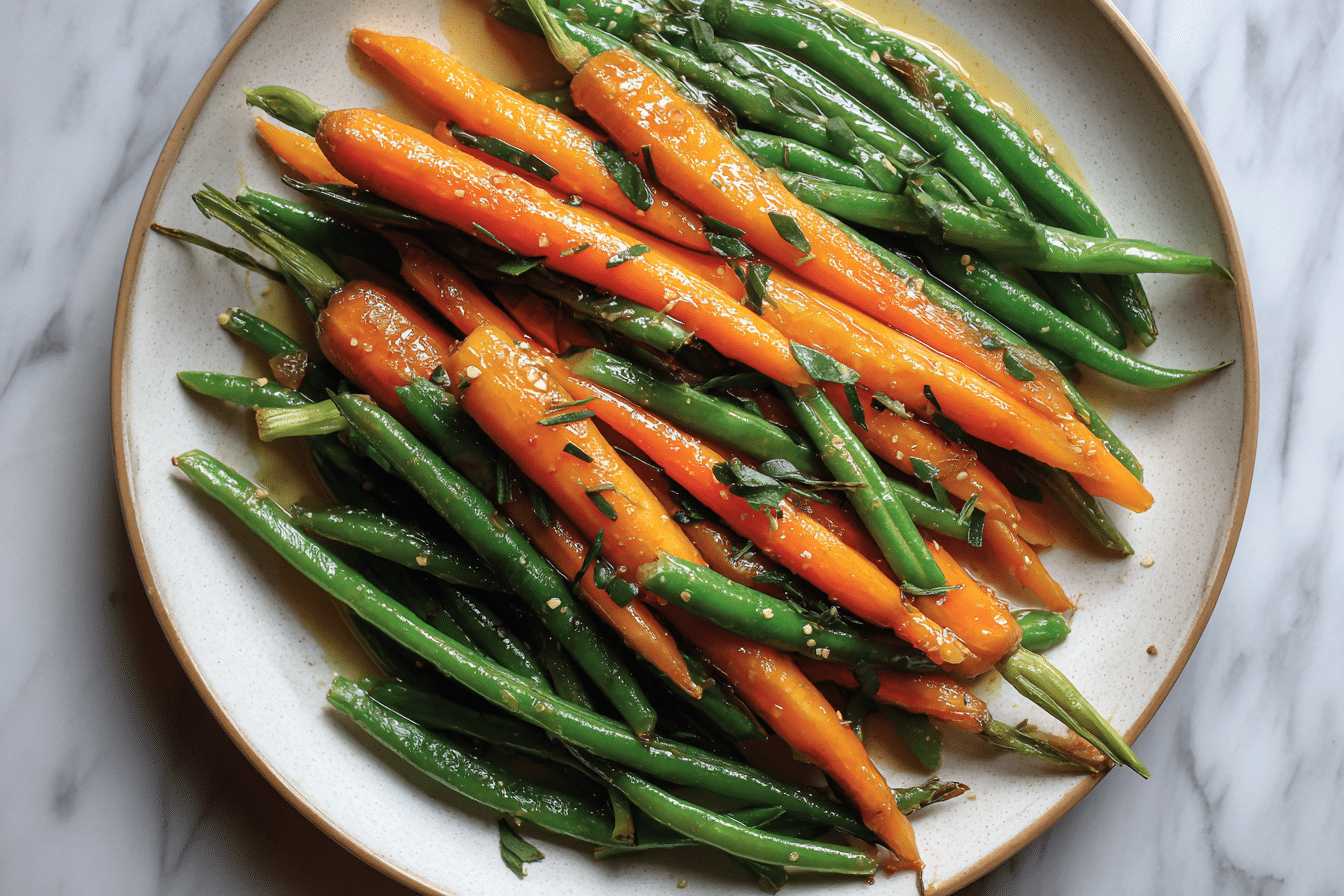
Carrots form the base of this dish, offering a firm texture that softens as heat is applied. When cut into evenly sized sticks, they cook at a steady pace and absorb flavor from the glaze. Their natural sweetness becomes more noticeable once warmed in butter and honey, making them a central part of the final taste.
Green beans bring contrast through their light crunch and mild earthy flavor. They help balance the softness of carrots and prevent the dish from becoming overly soft. Fresh green beans are ideal, though frozen versions can be used when fresh ones are not available.
Honey provides the coating that brings everything together. When heated with butter, it turns into a thin glaze that spreads across the vegetables and lightly clings to their surfaces. The sweetness is gentle and works as a bridge between the two vegetables.
Butter adds smooth richness and helps distribute flavor evenly in the pan. Garlic introduces a subtle savory layer that supports the glaze without taking attention away from the vegetables themselves. Salt and black pepper round out the flavor profile and bring structure to the dish.
A small amount of water helps the vegetables soften at the beginning of cooking and later allows the glaze to form properly. Lemon juice is optional and adds a light contrast that lifts the overall taste if included.
Ingredients
1 pound carrots, peeled and cut into sticks
12 ounces green beans, trimmed
3 tablespoons honey
2 tablespoons unsalted butter
2 cloves garlic, finely chopped
1/4 teaspoon salt
1/8 teaspoon black pepper
2 tablespoons water
1 teaspoon lemon juice (optional)
Step-by-Step Instructions
Begin by preparing all ingredients so the cooking process moves smoothly. Cut carrots into evenly sized sticks so they soften at the same rate. Trim the ends of the green beans and rinse both vegetables under cool water, then set aside.
Place a wide skillet over medium heat and add butter. Allow it to melt fully, then add chopped garlic. Stir briefly until the garlic releases aroma, taking care not to let it darken too much, as this can create a bitter taste.
Add the carrot sticks to the pan first. Stir them in the melted butter so they are lightly coated. Pour in the water and cover the skillet. This step allows the carrots to soften gradually while holding their shape.
After a few minutes, add the green beans. Mix them with the carrots so heat spreads evenly across both vegetables. Cover again and continue cooking until both reach a tender stage while still keeping a slight bite in texture.
In a small bowl, mix honey with lemon juice if using. Pour this mixture into the skillet and stir gently so all vegetables are evenly coated. The heat helps the honey blend with butter and form a light glaze.
Add salt and black pepper, stirring to distribute seasoning throughout the pan. Remove the lid and allow the mixture to cook briefly so the glaze thickens slightly and clings to the vegetables.
Once the vegetables are tender and coated with a light sheen, remove the skillet from heat. Serve while warm for the best texture.
Tips, Variations & Substitutions
Cutting vegetables into similar sizes is important for even cooking. If carrots are thick, slicing them lengthwise helps them soften at a similar rate to green beans.
Maple syrup can replace honey for a slightly deeper flavor profile. It blends smoothly with butter and creates a similar coating on the vegetables.
A small pinch of chili flakes can be added for gentle heat. This creates a mild contrast against the sweetness without changing the main character of the dish.
Vegetable stock can be used instead of water for added depth. This works well when serving alongside roasted meats or grain-based meals.
Plant-based butter can be used in place of dairy butter. The glaze still forms properly and coats the vegetables in the same way.
Serving Ideas & Occasions
Honey Glazed Carrots & Green Beans fits easily beside roasted chicken, baked fish, turkey, or plant-based mains such as lentils or tofu. The mild sweetness pairs well with savory dishes and roasted flavors.
This dish is often served during family meals, holiday spreads, and casual dinners where a vegetable side is needed without extra preparation time. The bright colors also add visual balance to a plate.
It works well alongside mashed potatoes, rice, quinoa, or simple grain bowls. A fresh salad with citrus dressing pairs nicely to round out the meal.
Nutritional & Health Notes
Carrots provide fiber and plant-based compounds that support a balanced diet. Their natural sweetness reduces the need for added sugars while still contributing flavor.
Green beans add fiber, vitamins, and a light texture that balances the dish. Together, the vegetables form a nutrient-rich side that fits into many eating patterns.
Honey and butter contribute flavor and richness, but both can be adjusted depending on dietary preference. Smaller amounts still create a light coating while keeping the dish balanced.
FAQs
Can frozen vegetables be used instead of fresh ones?
Frozen carrots and green beans can be used when fresh produce is not available. They should be thawed slightly before cooking to reduce extra moisture in the pan. This helps the glaze stick more evenly to the vegetables. Cooking time may also be slightly shorter since frozen vegetables are often partially softened before freezing.
What keeps the vegetables from turning too soft?
Timing and heat level play an important role. Carrots should start cooking first since they take longer to soften, while green beans are added later. Keeping the heat steady prevents rapid breakdown of texture. Removing the pan from heat once vegetables are tender helps maintain a slight bite.
Can this dish be made ahead of time?
Yes, it can be prepared in advance and stored in a covered container after cooling. When reheating, a skillet over low heat works best. A small splash of water can be added if the glaze becomes too thick. Gentle reheating helps preserve texture better than high heat methods.
What can replace honey in this recipe?
Maple syrup and agave syrup are suitable replacements. Both blend with butter to form a light glaze and provide a similar level of sweetness. Each option slightly changes the flavor profile but still works well with the vegetables.
Can other vegetables be added?
Yes, vegetables such as snap peas, broccoli florets, or zucchini slices can be included. It is important to match cooking times so everything finishes evenly. Harder vegetables should go in earlier, while softer ones can be added later in the process.
Does this dish work for meal preparation?
This recipe works well for meal preparation and keeps for a couple of days when stored in the refrigerator. An airtight container helps maintain freshness. Reheating in a skillet helps keep the texture closer to freshly cooked vegetables.
What dishes pair well with this side?
This side dish pairs well with roasted meats, baked fish, or plant-based mains like tofu and lentil-based dishes. It also fits with rice, quinoa, or mashed potatoes, adding color and a light sweet contrast to the plate.