
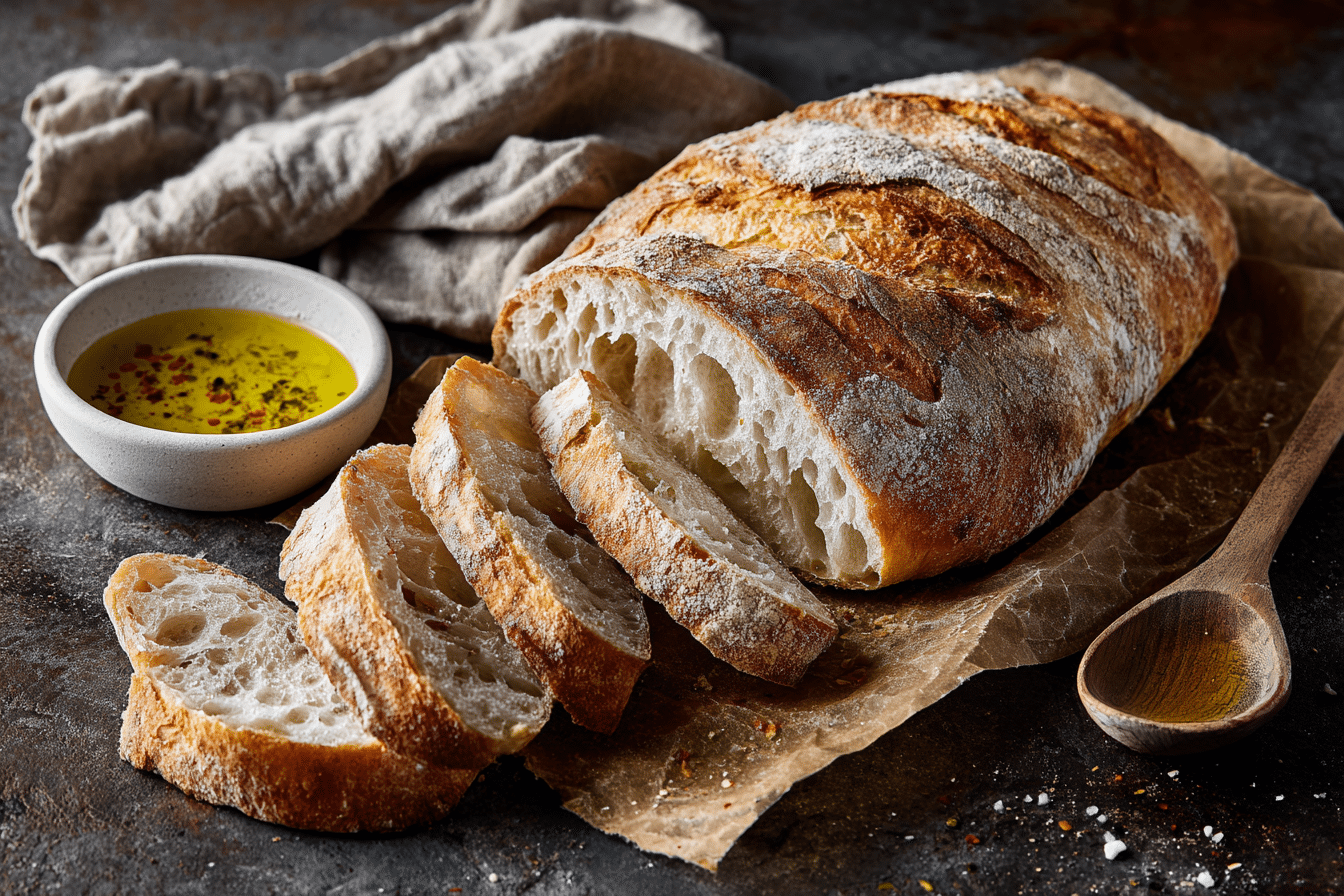
No-Knead Ciabatta with a Light and Airy Crumb is a rustic Italian bread that delivers big results with minimal effort. Known for its signature open crumb, chewy texture, and crisp crust, ciabatta is beloved in everything from hearty sandwiches to olive oil-dipped starters. The beauty of this version? No kneading required.
This recipe relies on time and hydration rather than intensive mixing. The dough is loose and sticky—exactly what you want for a ciabatta that’s full of irregular holes and a cloud-like interior. With just four pantry ingredients and a bit of patience, you’ll have bakery-style bread that tastes like it came straight out of a wood-fired oven.
What sets this ciabatta apart is its deeply fermented flavor and gorgeous structure. It’s perfect for those new to bread baking or anyone who wants fresh homemade bread without investing hours in hands-on labor.
Ingredients Overview
The ingredient list is short, but each element plays a crucial role in creating the ideal ciabatta texture and taste.
Bread Flour
Bread flour has a higher protein content than all-purpose flour, which helps build gluten structure without kneading. This is essential for achieving that airy crumb and chewy bite. You can substitute all-purpose flour, but the result will be slightly less open in texture.
Instant Yeast
Also known as rapid-rise yeast, this gives the dough its rise without requiring a separate proofing step. It activates quickly and works well with high hydration doughs like ciabatta. If using active dry yeast, dissolve it in a bit of warm water first.
Salt
Salt not only enhances flavor but also regulates yeast activity, which is especially important in long-fermented doughs. Use fine sea salt or kosher salt for consistent flavor.
Water
Water is the magic behind this high-hydration dough. It keeps the crumb open and light. Use room-temperature or slightly cool water—cold fermentation slows the rise and improves flavor over time.
Optional additions like olive oil or a dusting of semolina flour are sometimes used in traditional recipes, but this version keeps things simple for maximum authenticity and ease.
Step-by-Step Instructions
1. Mix the dough:
In a large mixing bowl, combine 3¼ cups (400g) of bread flour, 1½ teaspoons salt, and ¼ teaspoon instant yeast. Stir briefly to distribute ingredients. Add 1½ cups (360ml) of room-temperature water and mix with a spatula or wooden spoon until a sticky, shaggy dough forms. No kneading necessary.
2. First rise (bulk fermentation):
Cover the bowl tightly with plastic wrap or a damp towel and let it sit at room temperature (68–72°F / 20–22°C) for 12 to 18 hours. The dough will double in size, become bubbly, and look jiggly when gently shaken.
3. Shape the dough:
Generously flour a work surface and gently scrape the dough out of the bowl. It will be loose and sticky—handle it lightly to preserve the bubbles. Dust the top with flour and use a bench scraper to divide it into two equal portions. Gently shape each piece into a rough rectangle or slipper shape (the meaning of “ciabatta” in Italian).
4. Second rise:
Transfer the shaped dough onto a parchment-lined baking sheet or well-floured couche, cover with a damp cloth, and let rise for 45–60 minutes. They should puff up slightly but not spread too much.
5. Preheat the oven:
About 30 minutes before baking, preheat your oven to 475°F (245°C). If you have a baking stone or steel, place it in the oven to preheat. Set a pan of water on the lower rack to create steam, which helps the crust form beautifully.
6. Bake the ciabatta:
Gently slide the dough onto the preheated stone or place the baking sheet directly into the oven. Bake for 18–22 minutes, or until the loaves are deep golden brown and sound hollow when tapped. Rotate halfway through if needed for even browning.
7. Cool and enjoy:
Let the ciabatta cool completely on a wire rack before slicing to allow the crumb to set. Cutting too early will squash the open crumb structure.
Tips, Variations & Substitutions
Tips:
-
The dough will be very wet—resist the urge to add flour. Hydration is key for the open crumb.
-
Use a bench scraper to handle the dough instead of your hands to avoid sticking.
-
Use parchment paper to easily transfer the dough to the oven without deflating it.
-
Letting the dough ferment overnight develops flavor and improves structure.
Variations:
-
Add chopped fresh rosemary or roasted garlic to the dough before the first rise for an herby twist.
-
Sprinkle with sesame or poppy seeds before baking for texture.
-
For a sourdough version, replace yeast with ¼ cup of active sourdough starter and extend fermentation.
Substitutions:
-
If using active dry yeast instead of instant, dissolve it in a bit of the water before adding.
-
All-purpose flour can be used if bread flour isn’t available, though the crumb may be slightly less open.
Serving Ideas & Occasions
No-Knead Ciabatta is one of the most versatile breads you can bake. Its chewy, hole-filled interior is ideal for soaking up sauces, making sandwiches, or serving alongside soups and salads.
Try it as the base for a rustic panini with mozzarella, tomatoes, and basil. It’s also incredible sliced, toasted, and brushed with garlic olive oil for crostini or bruschetta.
Perfect for weekend baking, dinner parties, or simply keeping on hand for everyday meals, this ciabatta is your go-to artisan bread—without the artisan effort.
Pair with hearty stews, olive tapenade, or a good sharp cheese and wine for a comforting, satisfying spread.
Nutritional & Health Notes
This ciabatta is naturally vegan and free of processed ingredients, made with only flour, water, salt, and yeast. Each slice is lower in fat than enriched breads, making it a lighter choice for sandwiches or dipping.
Its long fermentation improves digestibility and deepens flavor, offering a more complex profile than quick-rise breads. Bread made with just a few wholesome ingredients like this can be a satisfying and nourishing part of your day.
For added nutrition, you can mix in a bit of whole wheat flour (up to 25% of the total weight), though this will slightly reduce the open crumb.
FAQs
Can I refrigerate the dough for longer fermentation?
Yes, after the initial mix, you can place the dough in the fridge for up to 24 hours. Let it come to room temperature for about 1 hour before shaping.
Why is my dough so sticky?
That’s expected! Ciabatta dough is very high hydration, which creates the light and open crumb. Handle with floured hands or a scraper instead of adding more flour.
Can I freeze the baked ciabatta?
Yes. Once cooled, wrap the loaves in plastic wrap and freeze for up to 2 months. Thaw at room temperature and reheat in a warm oven to revive the crust.
Can I make this with sourdough starter?
Absolutely. Use ¼ cup of active starter, omit the yeast, and extend the fermentation time to 18–24 hours. The flavor will be tangier and more complex.
Do I need a baking stone?
It helps, but it’s not required. Baking directly on a preheated sheet pan or using parchment paper on an oven rack also works well.
What’s the best way to store ciabatta?
Store at room temperature in a paper bag or loosely covered with a kitchen towel. Avoid sealing it tightly, which softens the crust. For longer storage, freeze it.
How do I get a crisp crust?
Steam is key. Place a pan of hot water in the oven during baking, or spritz the oven walls with water before closing the door to create steam in the first 10 minutes.
Light and Airy No-Knead Ciabatta Bread for Beginners
A rustic, no-knead Italian bread with a chewy crust and light, airy crumb. Made with just four ingredients and minimal effort, perfect for sandwiches or dipping.
- Prep Time: 10 minutes
- Cook Time: 20 minutes
- Total Time: 14–20 hours (including fermentation)
- Yield: 2 loaves 1x
Ingredients
3¼ cups (400g) bread flour
1½ tsp salt
¼ tsp instant yeast
1½ cups (360ml) water
Instructions
-
Mix flour, salt, and yeast. Add water and stir until a sticky dough forms.
-
Cover and ferment at room temperature for 12–18 hours until bubbly and doubled.
-
Turn out onto floured surface. Divide and gently shape into two loaves.
-
Let rise 45–60 minutes covered with a towel.
-
Preheat oven to 475°F (245°C) with a pan of water for steam.
-
Bake loaves 18–22 minutes until golden brown and hollow-sounding.
-
Cool completely before slicing.
Notes
High hydration dough is key—avoid adding extra flour. Use a baking stone for best crust.