
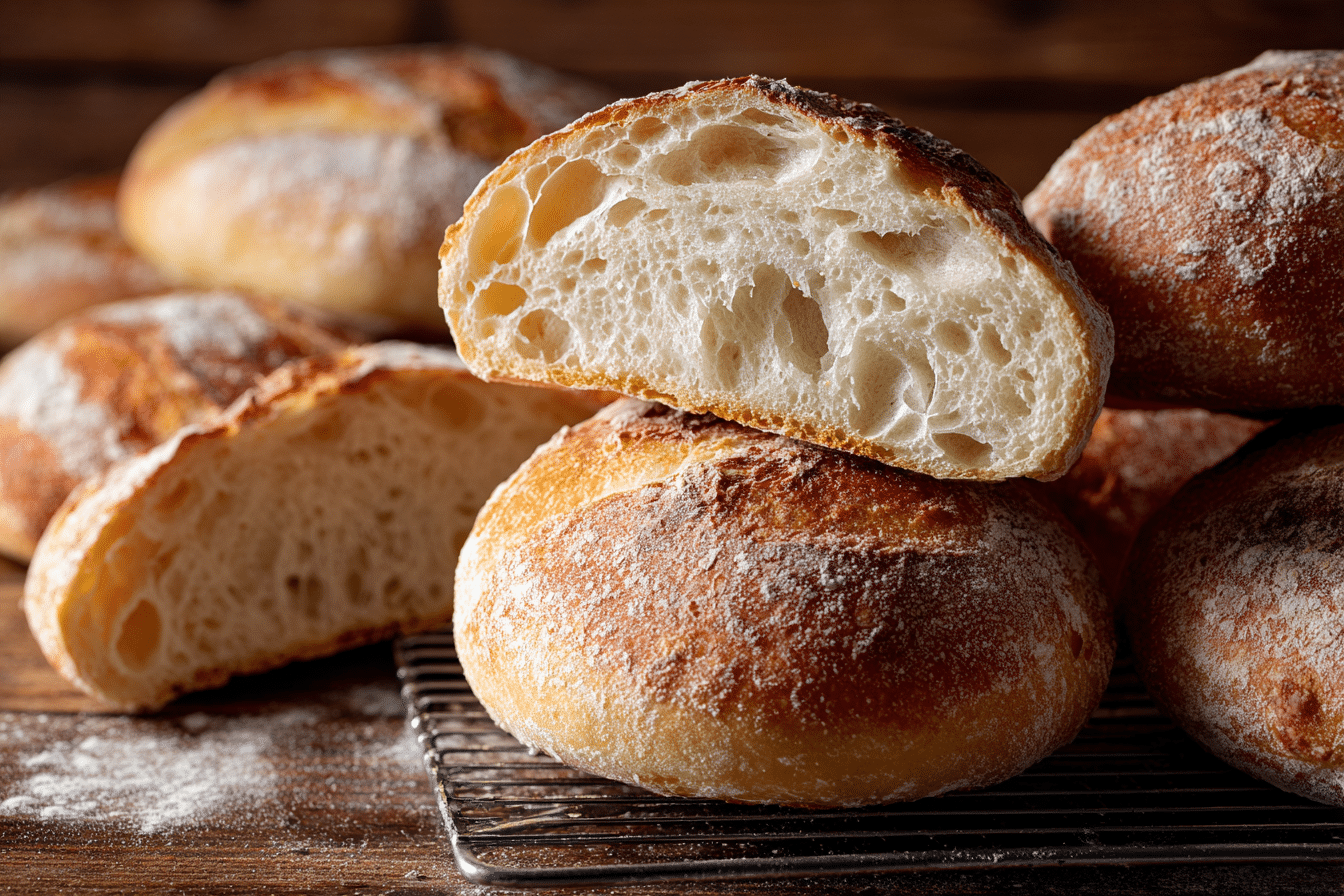
No-Knead Ciabatta with a Light and Airy Crumb is the kind of bread that feels rustic, impressive, and deeply satisfying without requiring complicated technique. With its crisp golden crust and open, airy interior, ciabatta is known for its beautiful irregular holes and chewy texture. This no-knead version makes it accessible for home bakers who want artisan-style bread with minimal effort.
What sets No-Knead Ciabatta with a Light and Airy Crumb apart is its high hydration dough and slow fermentation. Instead of kneading, time does the work. The dough develops structure as it rests, creating that signature airy crumb and delicate chew.
Perfect for sandwiches, dipping into olive oil, or serving alongside soups, this bread delivers bakery-style results straight from your own oven.
Ingredients Overview
Bread flour is the best choice for No-Knead Ciabatta with a Light and Airy Crumb. Its higher protein content helps build gluten naturally during the long fermentation, resulting in a strong structure and airy interior. All-purpose flour can be used, but the crumb may be slightly less open.
Water is used in a higher ratio than in many traditional breads. This high hydration creates steam within the dough during baking, contributing to the open crumb and chewy texture.
Active dry yeast or instant yeast provides lift. Because the dough rests for an extended period, only a small amount of yeast is needed.
Salt enhances flavor and strengthens the dough structure. Use fine sea salt or kosher salt for even distribution.
Olive oil is optional but often added in small amounts for subtle richness and flavor.
The simplicity of these ingredients highlights the importance of proper timing and handling.
Step-by-Step Instructions
In a large bowl, combine 3 1/2 cups bread flour, 1 1/2 teaspoons salt, and 1/2 teaspoon instant yeast. Stir to combine.
Add 1 3/4 cups room-temperature water and mix with a wooden spoon or spatula until a shaggy, sticky dough forms. The dough will appear wet and loose. This is normal and necessary for an airy crumb.
Cover the bowl tightly with plastic wrap or a clean towel. Let the dough rest at room temperature for 12 to 18 hours. During this time, the dough will rise and develop bubbles on the surface.
After the long rest, lightly flour a work surface. Gently scrape the dough out of the bowl, being careful not to deflate it too much.
With floured hands, fold the dough over itself a few times to create a rough rectangle. Avoid kneading. The goal is to maintain as many air pockets as possible.
Transfer the dough onto a heavily floured piece of parchment paper. Shape gently into a rectangle about 10 inches long. Dust the top with flour and cover loosely with a towel. Let rise for another 45 to 60 minutes.
Preheat the oven to 450°F. Place a baking stone or inverted baking sheet inside to heat thoroughly.
Carefully transfer the parchment and dough onto the hot baking surface. Bake for 20 to 25 minutes, until the crust is deep golden brown and the loaf sounds hollow when tapped.
For extra crust development, place a shallow pan of hot water on the lower rack during baking to create steam.
Allow the bread to cool completely before slicing. Cutting too early can compress the crumb and affect texture.
Tips, Variations & Substitutions
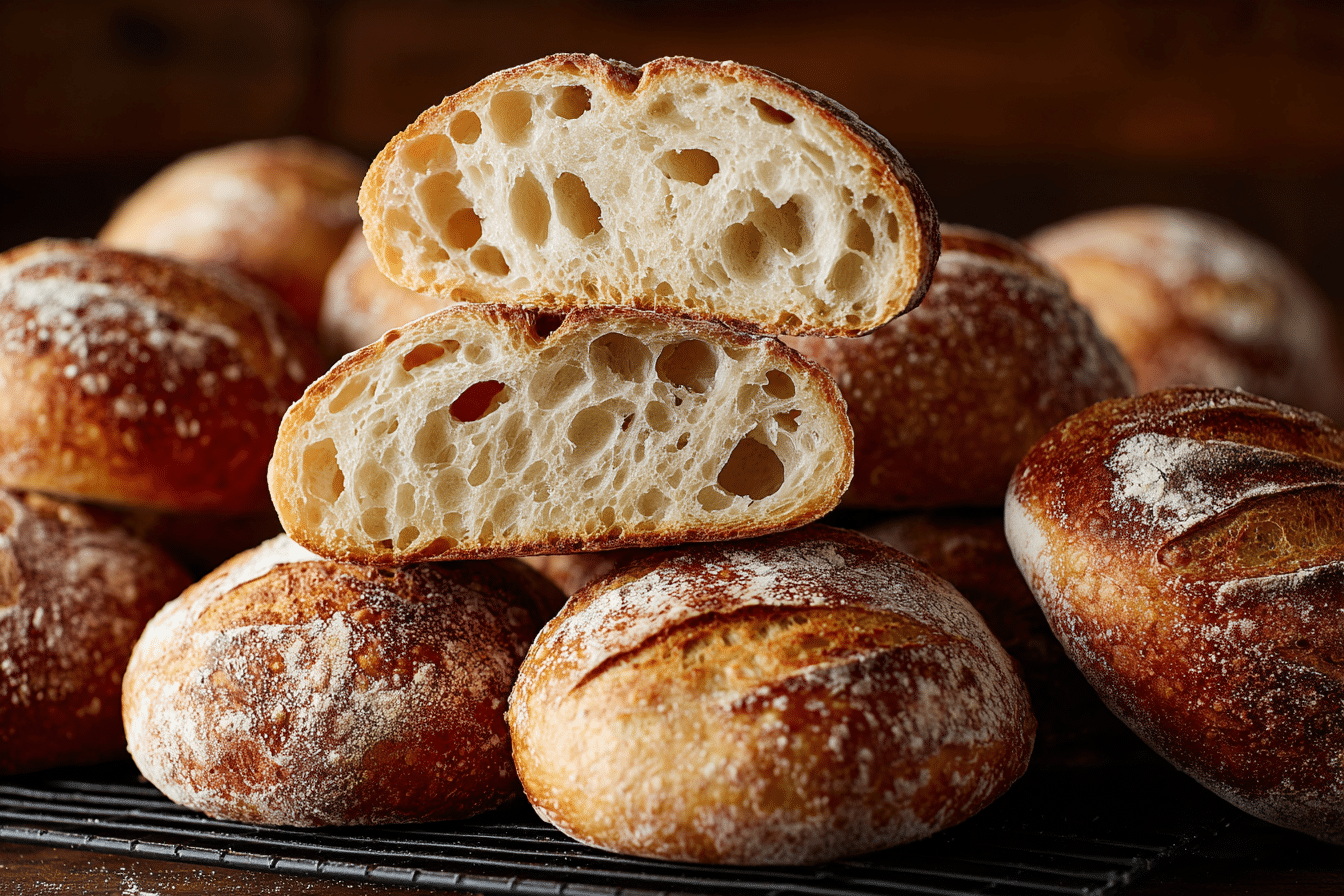
Use bread flour for the most open crumb. If using all-purpose flour, reduce the water slightly by 2 tablespoons to maintain structure.
Do not over-handle the dough. Gentle shaping preserves the air bubbles created during fermentation.
For added flavor, mix in chopped olives, rosemary, or roasted garlic after the initial rise, folding gently to distribute.
If your kitchen is cool, extend the fermentation time slightly. Warmer environments may shorten the rise.
A baking stone improves crust texture, but a preheated baking sheet also works well.
Serving Ideas & Occasions
No-Knead Ciabatta with a Light and Airy Crumb is ideal for sandwiches, especially with grilled vegetables, roasted meats, or fresh mozzarella.
Slice and serve with olive oil and balsamic vinegar for a simple appetizer.
It pairs beautifully with hearty soups, pasta dishes, or salads.
This bread is perfect for weekend baking, casual gatherings, or anytime you want fresh artisan bread without intensive effort.
Nutritional & Health Notes
Ciabatta provides carbohydrates for energy and small amounts of protein from flour.
Because it contains minimal added fat and sugar, it fits well into balanced meals when paired with vegetables and lean proteins.
Using whole wheat flour for up to one-third of the total flour can increase fiber content, though the crumb will be slightly denser.
Portion size is important when serving with rich dishes.
FAQs
1. Why is my ciabatta dough so sticky?
High hydration is essential for an airy crumb. The dough should be sticky. Use flour on your hands and surface rather than adding too much flour to the dough.
2. Can I shorten the fermentation time?
Long fermentation develops flavor and structure. Shortening it may result in a denser loaf.
3. Do I need a Dutch oven?
No, ciabatta is typically baked directly on a stone or baking sheet. Steam in the oven helps create crust.
4. How do I know when the bread is done?
The crust should be deep golden and the loaf should sound hollow when tapped on the bottom.
5. Can I freeze ciabatta?
Yes, cool completely, wrap tightly, and freeze for up to two months. Thaw at room temperature.
6. Why didn’t my bread develop large holes?
Over-handling or adding too much flour can reduce air pockets. Gentle shaping preserves structure.
7. How should I store leftover ciabatta?
Store at room temperature in a paper bag for up to two days. Reheat briefly in the oven to refresh the crust.
PrintNo-Knead Ciabatta with a Light and Airy Crumb: 4 Simple Artisan Secrets
A rustic no-knead ciabatta bread with a crisp golden crust and light, airy interior.
Ingredients
3 1/2 cups bread flour
1 1/2 teaspoons salt
1/2 teaspoon instant yeast
1 3/4 cups room-temperature water
1 tablespoon olive oil optional
Instructions
-
Mix flour, salt, and yeast in a large bowl.
-
Add water and stir until shaggy dough forms.
-
Cover and let rise 12 to 18 hours at room temperature.
-
Gently fold and shape dough on floured surface.
-
Let rise again 45 to 60 minutes.
-
Bake at 450°F for 20 to 25 minutes until golden.
-
Cool completely before slicing.
Notes
Handle gently to preserve air pockets. Use steam in oven for crisp crust.