
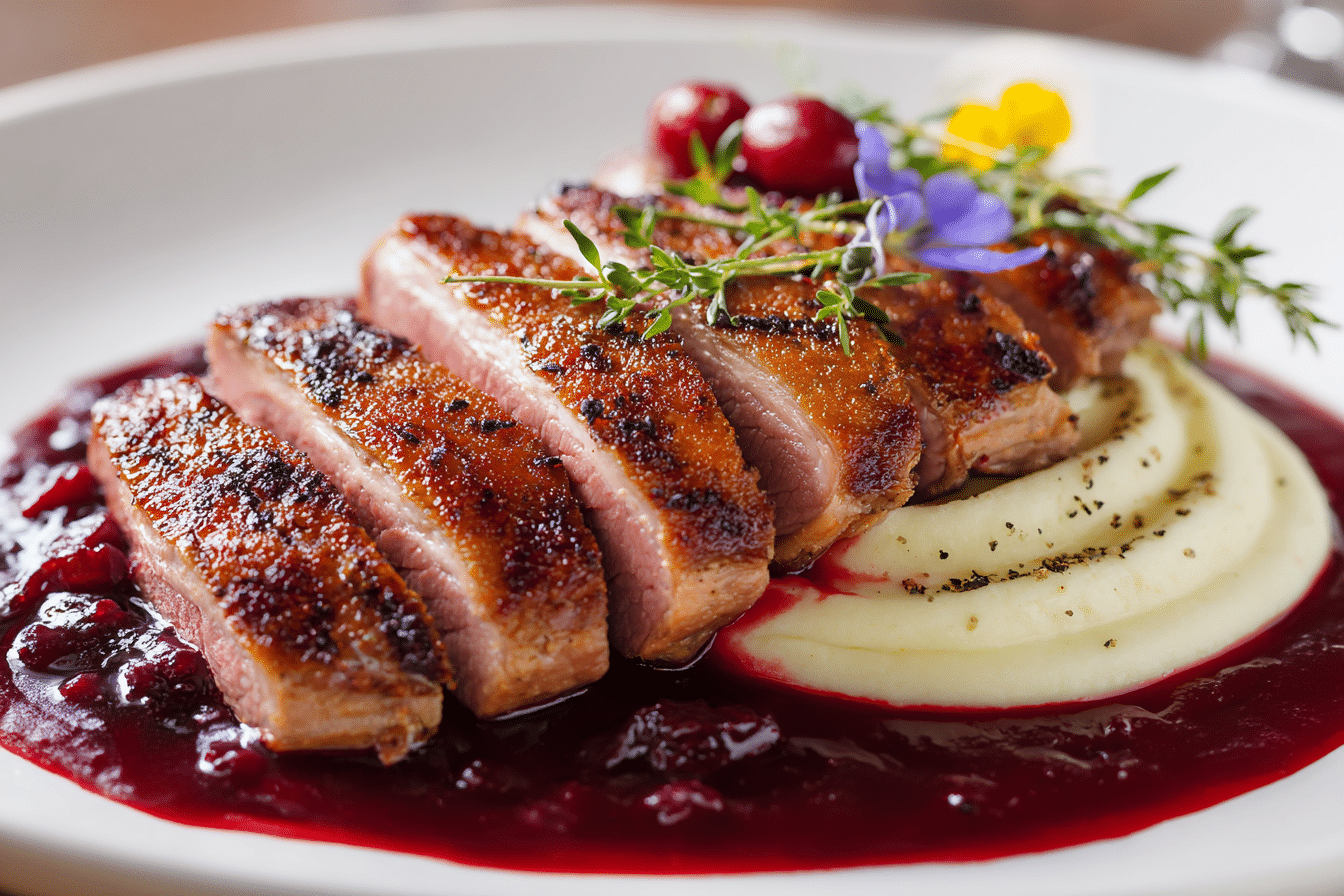
Succulent, crispy-skinned Seared Duck Breast with Cherry Sauce is a dish that brings restaurant-quality elegance to your home kitchen. With its rich, gamey flavor and tender meat, duck pairs beautifully with the sweet-tart complexity of a cherry reduction — creating a balanced and deeply satisfying plate.
Often associated with French cuisine, seared duck breast (magret de canard) is a staple in fine dining, yet surprisingly achievable for the home cook. A proper sear renders the fat cap into golden, crackling skin while keeping the meat rosy and juicy inside. The cherry sauce, made with red wine, shallots, and fresh or frozen cherries, adds a luscious, slightly acidic contrast that cuts through the richness.
Perfect for holiday dinners, anniversaries, or romantic nights in, this dish delivers impressive flavor with simple technique — and just a touch of indulgence.
Ingredients Overview
This dish is built on a handful of quality ingredients. Each one plays a crucial role in building flavor and texture.
Duck Breast
Duck breast offers a rich, meaty flavor unlike chicken or turkey. The thick layer of fat renders during cooking, leaving behind crisp, golden skin.
-
Moulard or Pekin duck are commonly sold in the U.S. Look for breasts with even fat coverage.
-
Tip: Score the fat but avoid cutting into the meat to allow even rendering.
Cherries
Cherries add brightness and natural sweetness. Fresh or frozen both work well.
-
Sweet cherries (like Bing) offer a balanced profile.
-
Tart cherries (like Montmorency) bring more acidity and depth.
-
Frozen cherries are great when out of season — no need to thaw first.
Red Wine
Adds body and richness to the sauce.
-
Choose a dry, fruity red like Pinot Noir or Merlot.
-
Avoid overly tannic or oaky wines.
Shallots and Garlic
These aromatics form the base of the sauce, lending subtle sweetness and depth.
Chicken Stock
Reduces into a savory foundation, anchoring the sauce with umami.
Balsamic Vinegar
A splash adds tang and enhances the cherry’s natural sweetness.
Optional Finishers:
-
Butter: Whisked in at the end for silky texture.
-
Fresh thyme: Adds herbal notes without overpowering.
-
Orange zest: For a citrusy lift.
Step-by-Step Instructions
1. Score and Season the Duck
Pat the duck breasts dry with paper towels. With a sharp knife, gently score the fat in a crosshatch pattern, taking care not to cut into the meat.
Season both sides generously with salt and black pepper. Let rest at room temperature for 20–30 minutes to promote even cooking.
2. Render and Sear the Duck
Place duck breasts skin-side down in a cold, dry skillet (preferably cast iron). Turn the heat to medium and let the fat slowly render, about 7–9 minutes.
Once the skin is deep golden and crisp, flip and cook the flesh side for 2–4 minutes, depending on thickness, until the internal temperature reaches 130°F (54°C) for medium-rare.
Tip: Adjust cook time for desired doneness (135°F for medium). Rest 10 minutes before slicing.
3. Make the Cherry Sauce
While the duck rests, discard excess duck fat from the pan, leaving about 1 tablespoon behind.
Add:
-
1 minced shallot
-
1 clove garlic, minced
Sauté for 1–2 minutes until softened. Add:
-
½ cup red wine
-
¾ cup cherries (pitted, halved)
-
½ cup chicken stock
-
1 tbsp balsamic vinegar
-
1 tsp fresh thyme (optional)
Simmer for 10–12 minutes, reducing until syrupy. Lightly mash some of the cherries with a spoon to thicken the sauce.
Finish with:
-
1 tablespoon cold butter, whisked in off heat for gloss
-
Salt and pepper to taste
4. Plate and Serve
Slice the duck breast thinly on the bias. Fan slices on each plate and spoon cherry sauce over the top or alongside.
Optional Garnishes: Microgreens, fresh thyme sprigs, or a dusting of orange zest.
Tips, Variations & Substitutions
Chef Tips
-
Cold pan start: Crucial for properly rendering duck fat without burning the skin.
-
Don’t rush resting: Duck continues to cook off heat, and resting keeps juices intact.
-
Deglaze the pan: For deeper flavor, deglaze with wine and scrape up any fond (brown bits).
Flavor Variations
-
Add port or brandy: Swap out some wine for a richer twist.
-
Spiced cherry sauce: Simmer with star anise, clove, or cinnamon for a holiday feel.
-
Berry swap: Use blackberries, blueberries, or a cherry-cranberry blend.
Dietary Options
-
Gluten-free: This dish is naturally gluten-free. Check your stock and vinegar labels.
-
Low-carb: Skip the wine and add a splash of red wine vinegar and a sugar-free cherry jam for a keto-friendly sauce.
Serving Ideas & Occasions
This dish shines in refined, cozy settings:
-
Holiday Meals: Ideal for Christmas, Valentine’s Day, or New Year’s Eve.
-
Dinner Parties: A guaranteed conversation piece — just double the recipe.
-
Romantic Dinners: Elegant without being overly fussy.
Serve With:
-
Creamy mashed potatoes or parsnip purée
-
Roasted Brussels sprouts or sautéed greens
-
Wild rice or farro with herbs
-
A bold red wine like Pinot Noir or Côtes du Rhône
The balance of rich duck, sweet-sour cherry, and crispy skin makes this dish unforgettable with minimal effort.
Nutritional & Health Notes
Duck breast is a rich protein source, providing:
-
High-quality protein
-
B vitamins and iron
-
Heart-healthy monounsaturated fats (when skin is properly rendered)
Health tips:
-
Spoon off excess fat for a lighter version.
-
Pair with antioxidant-rich cherries and greens to balance richness.
-
Portion control: 6 oz cooked duck is a satisfying serving.
This dish is indulgent, but balanced with whole ingredients and a natural sauce — no cream or thickeners needed.
FAQs
Q1: Can I use frozen cherries?
A1: Yes, frozen cherries work perfectly and are often more convenient. No need to thaw — just add directly to the pan and increase simmer time slightly.
Q2: What’s the best way to know when duck is done?
A2: Use an instant-read thermometer. Aim for 130°F for medium-rare or 135°F for medium. Always rest before slicing.
Q3: My duck skin isn’t crisping. What went wrong?
A3: The pan may have been too hot too quickly. Start with a cold pan and medium heat to allow gradual fat rendering.
Q4: Can I make the cherry sauce ahead of time?
A4: Absolutely. Make the sauce up to 2 days ahead and reheat gently before serving. Wait to whisk in the final butter until just before serving for best texture.
Q5: What can I substitute for wine in the sauce?
A5: Use low-sodium chicken broth with a splash of balsamic vinegar or cherry juice. This keeps the sauce flavorful without alcohol.
Q6: Can I cook duck breasts in the oven?
A6: For thicker cuts, after searing both sides, transfer to a 400°F oven for 5–6 minutes to finish. Rest before slicing.
Q7: How do I store leftovers?
A7: Store sliced duck and sauce separately in airtight containers. Reheat gently in a skillet or oven to preserve texture.
PrintPlated Entrée Idea: Crispy Duck Breast & Festive Cherry Sauce
Crispy seared duck breast served with a luscious red wine cherry sauce — elegant, flavorful, and perfect for special occasions.
- Prep Time: 15 minutes
- Cook Time: 20 minutes
- Total Time: 35 minutes
- Yield: 2 servings 1x
Ingredients
Duck:
-
2 boneless duck breasts
-
Salt and pepper
Cherry Sauce:
-
1 tsp duck fat or olive oil
-
1 shallot, minced
-
1 clove garlic, minced
-
½ cup red wine
-
¾ cup cherries (fresh or frozen, halved)
-
½ cup chicken stock
-
1 tbsp balsamic vinegar
-
1 tsp fresh thyme (optional)
-
1 tbsp cold butter
-
Salt and pepper, to taste
Instructions
-
Score duck skin. Season with salt and pepper.
-
Place skin-side down in a cold skillet. Heat to medium and render fat for 7–9 minutes.
-
Flip and cook 2–4 minutes more, until internal temp is 130°F. Rest 10 minutes.
-
For sauce, sauté shallot and garlic in reserved fat. Add wine, stock, cherries, vinegar, and thyme. Simmer 10–12 minutes.
-
Mash some cherries, whisk in butter, and season to taste.
-
Slice duck thinly and serve with warm cherry sauce.
Notes
-
Use frozen cherries if fresh are unavailable.
-
Port wine adds deeper flavor.
-
Can be scaled for entertaining.