
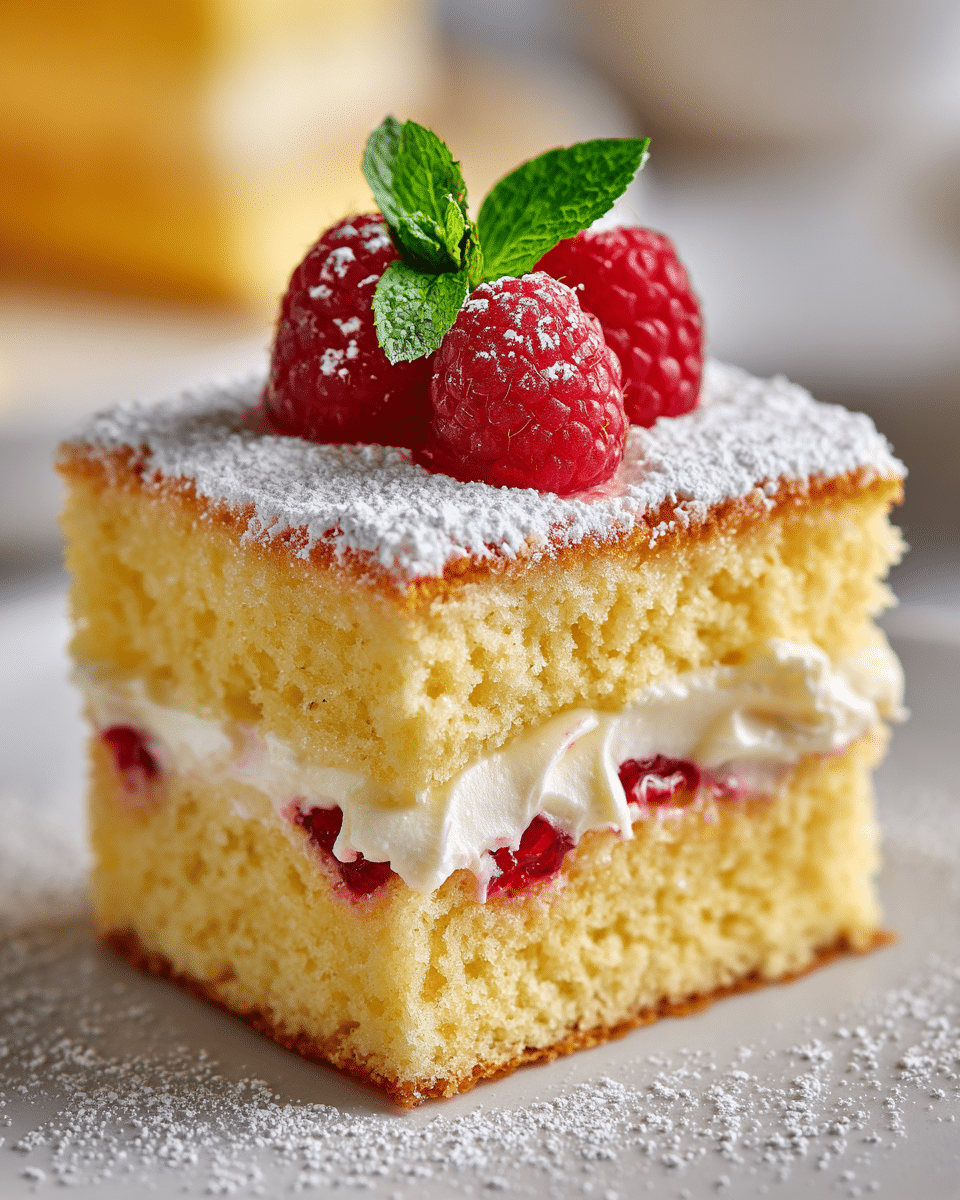
A light and fluffy sponge cake is a timeless dessert that feels both elegant and effortless. Whether layered with whipped cream and fruit, frosted for birthdays, or simply dusted with powdered sugar, sponge cake is beloved around the world for its delicate texture and versatile use.
This version is a classic European-style sponge made without butter or oil. Instead, it relies on whipped eggs and sugar for its airy structure. It’s simple, with only a few ingredients, but the technique is key—perfect for building your baking skills and impressing your guests with a dessert that’s soft, tall, and feather-light.
Ingredients Overview: Just a Few Pantry Staples
Eggs (Room Temperature)
Eggs are the foundation of sponge cake.
-
The whites provide lift and structure.
-
The yolks add richness and moisture.
-
Whipping them correctly creates the cake’s iconic airy texture.
Granulated Sugar
Adds sweetness and helps stabilize the egg foam when beaten together.
Cake Flour
Low-protein cake flour keeps the texture soft and light.
-
If unavailable, substitute with a DIY version: use all-purpose flour minus 2 tablespoons per cup and replace with cornstarch.
Salt
Just a pinch sharpens the flavors and balances the sweetness.
Vanilla Extract (Optional)
Adds depth and warm aroma without overpowering the delicate texture.
Step-by-Step Instructions: How to Make a Perfect Sponge Cake
1. Prepare the Pan & Preheat
-
Preheat your oven to 350°F (175°C).
-
Line the bottom of a 9-inch round cake pan (or two 6-inch pans) with parchment paper.
-
Do not grease the sides—this helps the batter cling to the pan and rise tall.
2. Separate the Eggs
-
Separate 4 large eggs, placing yolks in one bowl and whites in another.
-
Make sure no yolk gets into the whites—this affects whipping.
3. Whip the Egg Yolks
-
Add ½ cup granulated sugar to the yolks.
-
Beat on high speed until pale, thick, and ribbons form when lifted (about 3–4 minutes).
-
Add 1 tsp vanilla extract if using.
4. Whip the Egg Whites
-
Clean beaters thoroughly (any grease prevents proper whipping).
-
Beat whites with a pinch of salt until soft peaks form.
-
Gradually add ¼ cup sugar, continuing to beat until stiff, glossy peaks form.
5. Fold the Mixtures Together
-
Gently fold the yolk mixture into the whipped whites using a spatula.
-
Sift in ¾ cup cake flour in 2–3 batches, folding gently after each addition.
-
Mix until no flour streaks remain—but do not overmix.
6. Bake
-
Pour the batter into your prepared pan(s).
-
Bake for 22–28 minutes, or until golden and springy to the touch.
-
A toothpick should come out clean from the center.
7. Cool Inverted
-
Immediately turn the cake pan upside down on a rack or prop it to cool—this prevents collapse.
-
Once completely cool, run a knife around the edge and release from the pan.
Tips, Variations & Substitutions
Tips for Success:
-
Use room temperature eggs for maximum volume.
-
Whip thoroughly but don’t overbeat—stop when whites are stiff but not dry.
-
Fold slowly and carefully to preserve air.
-
Cool upside down if baking in a tube or ungreased pan—gravity helps keep the cake tall and fluffy.
Variations:
-
Lemon Sponge: Add 1 tsp lemon zest to the yolks.
-
Chocolate Sponge: Replace 2 tbsp flour with unsweetened cocoa powder.
-
Matcha Version: Add 1 tbsp matcha powder with flour.
-
Layer Cake: Slice horizontally and fill with jam, whipped cream, or custard.
Ingredient Swaps:
-
Gluten-Free: Use a 1:1 gluten-free flour blend specifically designed for cakes.
-
Refined Sugar-Free: Use coconut sugar, but note it will darken the cake color.
-
Dairy-Free: The base recipe is already dairy-free—no butter or milk required.
Serving Ideas & Occasions
This sponge cake is endlessly adaptable and ideal for:
-
Birthday parties and tea parties
-
Elegant brunches or showers
-
Holiday dessert tables
-
Layered cakes with fruit and whipped cream
-
Roll cakes and Swiss rolls
Serve it:
-
Plain with powdered sugar
-
Layered with berries and whipped cream
-
Frosted with buttercream or ganache
-
Topped with fresh seasonal fruit
Nutritional & Health Notes
This sponge cake is:
-
Lower in fat than butter-based cakes
-
Dairy-free by default
-
Made with whole eggs, providing some protein and nutrients
-
Easily portioned into lighter servings when layered with fruit or yogurt
To make it lighter:
-
Reduce sugar slightly
-
Serve with Greek yogurt and fresh fruit
-
Bake as a sheet and portion into thin slices
FAQ
1. Why is my sponge cake dense?
Most likely overmixed or under-whipped egg whites. Fold gently and stop mixing as soon as flour is combined.
2. Can I use all-purpose flour?
Yes, but sift it well and replace 2 tablespoons with cornstarch for a softer crumb.
3. Can I make it in advance?
Yes! Sponge cake stays fresh for 2–3 days wrapped tightly at room temperature or refrigerated.
4. Can I freeze sponge cake?
Absolutely. Wrap tightly in plastic and foil, then freeze for up to 1 month. Thaw at room temperature.
5. Can I use this for a layer cake?
Yes, it’s perfect. Slice the cake horizontally once cooled and layer with cream, jam, or curd.
6. Why didn’t my sponge rise?
This often happens if the egg whites weren’t whipped enough or if the batter was overmixed. Be gentle and precise.
7. Can I flavor the sponge differently?
Yes! Add citrus zest, almond extract, or cocoa powder to customize.
PrintPuffy Sponge Cake – Easy Homemade Baking Recipe
A light, airy sponge cake made with whipped eggs and no butter—perfect for layering, rolling, or serving plain with fruit and cream.
- Prep Time: 20 minutes
- Cook Time: 25 minutes
- Total Time: 45 minutes
- Yield: 8–10 servings 1x
Ingredients
-
4 large eggs, separated
-
¾ cup granulated sugar (½ cup for yolks, ¼ cup for whites)
-
¾ cup cake flour, sifted
-
1 tsp vanilla extract (optional)
-
Pinch of salt
Instructions
-
Preheat oven to 350°F. Line bottom of pan with parchment.
-
Beat yolks with ½ cup sugar until thick and pale. Add vanilla.
-
In a clean bowl, beat egg whites with salt to soft peaks. Add ¼ cup sugar gradually and beat to stiff peaks.
-
Fold yolk mixture into whites. Sift in flour in 2–3 batches, folding gently.
-
Pour into pan and bake 22–28 minutes, until golden and springy.
-
Cool upside down. Run knife around edge to release once fully cool.
Notes
-
Don’t grease pan sides for better rise
-
Fold gently to preserve air
-
Can be frozen or made ahead